An abandoned building crime scene can hide a story that nobody in town wants to talk about. Old houses are usually full of broken furniture, rubbish, and things people left behind when they moved away. But sometimes, you find something that makes you wonder whether the building was ever really empty. My friend Luke and I learned this the hard way when we explored an abandoned house behind an old furniture factory. We went there to take photographs. By the time we left, we wished we had never found the place.
Luke had heard about the house from a man who worked at a petrol station nearby. The man said the police had searched the property years earlier after a local resident disappeared. He couldn’t remember the missing man’s name, but he was certain the story had been in the local newspaper.
That was enough to interest us.
We both enjoyed exploring abandoned places, mostly because you never knew what you might find. Usually, it was old newspapers, damaged furniture, or rubbish left by people who had nowhere else to go. Sometimes we found things that were worth photographing. Neither of us expected to discover anything connected to a real crime.
We parked beside the road and walked through a gap in the rusty fence. The garden had almost swallowed the path, and weeds reached up to our knees. An old washing machine lay on its side near the entrance. Its door was open, and dead leaves had collected inside.
The front door was missing.
We stepped into the house.
The smell hit me first. It was the usual mixture of damp wood, mould, and dirty plaster, but there was something else underneath it. Cigarette smoke. It wasn’t strong, yet I noticed it immediately.
“Someone’s been staying here,” I said.
Luke looked around the entrance hall. “Or somebody was here recently.”
He took out his camera while I checked the rooms on the ground floor. There was a broken sofa in the living room, a table with one leg missing, and several newspapers scattered across the floor. Most of the pages had stuck together because of the damp.
The kitchen looked worse. One cupboard had fallen off the wall, and the sink was full of leaves and pieces of plaster. Beside it stood a mug with a dark stain at the bottom.
Everything around it was covered in dust, but the mug looked almost clean.
I called Luke over. He examined it, then shrugged.
“People break into abandoned houses all the time. Maybe someone had a drink here.”
That explanation made sense, so we continued looking around.
Luke crouched down and took a picture.
“Could be blood,” he said.
“Could be spilled paint.”
Neither of us knew. The stains were old, and we had no reason to assume they were connected to the disappearance. Still, I wondered why someone had removed the carpet from just that part of the room.
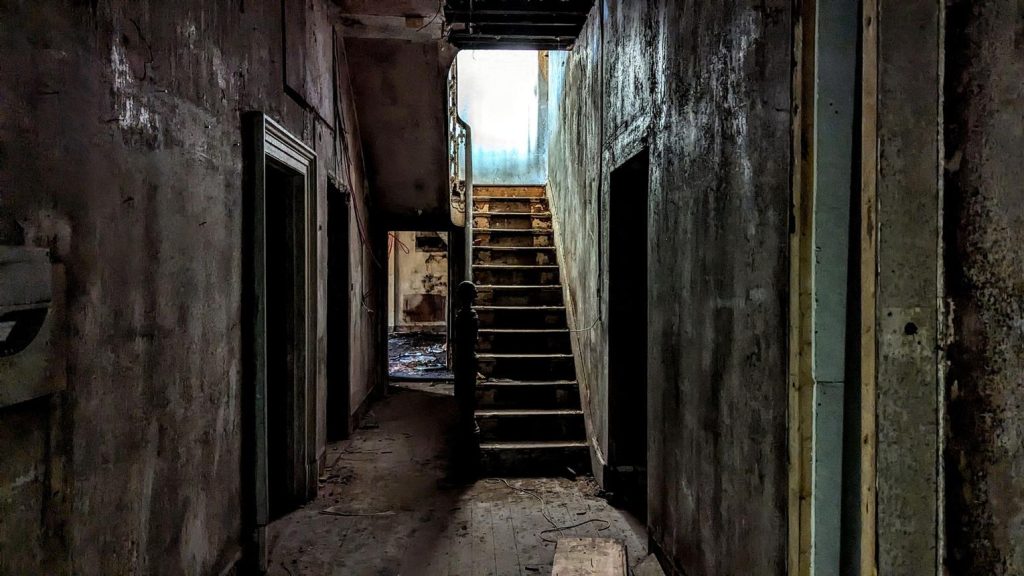
We found a staircase at the back of the house. The wooden steps creaked beneath our feet, and a few were cracked badly enough that we had to be careful. Upstairs, the air was colder, and the wind coming through the broken windows moved scraps of wallpaper along the corridor.
There were three bedrooms and a small bathroom. One bedroom contained an old wardrobe. Another had a mattress with the springs coming through the fabric. The last room was empty except for a chair facing the window.
At the end of the corridor was a narrow door with a working lock.
That seemed odd. Every other door in the house was damaged or hanging from its hinges, but this one had been kept in good condition.
Luke tried the handle. It wouldn’t move.
He found a short piece of metal on the floor and worked it into the latch. After a few minutes, we heard a click.
The door opened.
The room was small, with a desk against the wall and cardboard boxes stacked in one corner. A sleeping bag lay on the floor. Empty food packets, plastic bottles, and cigarette ends were scattered nearby.
Someone had been living there.
The coat hanging from a nail looked worn but usable. A pair of muddy boots stood beside the sleeping bag, and there was a small camping stove underneath the desk.
Luke stopped taking pictures and looked at me.
“We should probably leave.”
I agreed, but then I noticed the photographs on the desk.
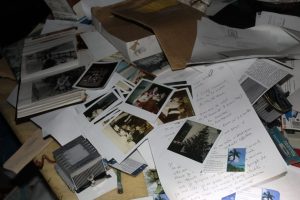
One photograph showed a man standing beside the front entrance.
I recognized his face from an old newspaper article I had read while researching the building. His name was Peter Hall. He had disappeared several years earlier, and the police had searched the surrounding area after his family reported him missing.
They had never found him.
I picked up another photograph. It showed Peter walking along the road near the factory. In another, he was standing outside a shop in town.
Whoever had collected these pictures had been following him.
Then I found a photograph of Luke beside his car.
It had been taken that morning.
We had only been there for a short time. The picture showed him opening the boot before we entered the house. The angle suggested the photographer had been standing behind the fence, watching us from the bushes.
“Luke, look at this.”
He took the photograph from my hand. His face changed as he examined it.
We checked the remaining pictures, hoping to find some explanation. Instead, we found more photographs of Peter Hall and several pictures of other people around town. We didn’t recognize most of them.
There were also handwritten notes, but they contained only names and brief comments. Nothing clearly explained why the photographs had been collected.
Then we heard a door close downstairs.
We both froze.
Footsteps crossed the ground floor. Whoever had entered the house was moving slowly, opening doors and looking inside rooms.
Luke quietly put the photographs back on the desk.
“Maybe it’s the owner,” he whispered.
I wanted to believe that. But if the man was the owner, why had he been photographing strangers and keeping pictures of someone who had disappeared?
We moved into the corridor and approached the staircase.
A man stood in the kitchen with his back to us. He wore a dark jacket and had a dirty bandage wrapped around one hand. He was looking through a cupboard, apparently searching for something.
Then he turned.
His eyes moved from Luke to me, and he stared at us without saying anything.
Finally, he spoke.
“You’re not supposed to be here.”
We ran into the nearest bedroom and shut the door. Luke pushed the wardrobe against it while I looked for another exit. The window was broken, but the drop to the ground was too far, and the garden below was covered with bricks and pieces of glass.
The man reached the bedroom door.
The handle moved.
“Open it,” he said.
We stayed quiet.
“I know you’ve seen the photographs.”
His voice wasn’t angry. That made it worse. He sounded as if he were speaking to someone who had done something mildly inconvenient.
Luke looked at me and mouthed the words, What do we do?
I had no answer.
The man tried the handle again. The door shook against the wardrobe, then everything went quiet.
We waited, barely breathing.
After a while, we heard footsteps moving away. A few moments later, the front door slammed.
We didn’t immediately move. We stood in the bedroom, listening for any sign that he had stayed inside. When we finally shifted the wardrobe, my hands were shaking so badly that I could barely grip it.
We hurried downstairs and ran outside.
Luke’s car was still parked beside the road, but the driver’s door stood open. The glove compartment had been emptied, and the camera he had left inside was gone.
We didn’t stop to look for it.
We drove straight to the police station.
At first, the officers seemed more concerned about our entering an unsafe building than about our story. That changed when we showed them the photograph of Peter Hall and explained that someone had been living in the house.
They took our statements and sent officers to the property.
The next day, a police officer called Luke. They had found the sleeping bag, food packets, and photographs. There were signs that someone had been staying in the room for quite a while, but the man we described was nowhere to be found.
The police wouldn’t tell us much more.
I searched for Peter Hall again and found an older newspaper report. It said he had disappeared after leaving a friend’s house. His car had later been found abandoned near the furniture factory, but there had been no clear evidence of what happened to him.
The investigation had eventually gone cold.
I contacted the police to ask whether the man with the bandaged hand might be connected to Peter’s disappearance. They told me they couldn’t discuss the case.
A few days later, Luke received a call from an unknown number. Nobody spoke at first. He could hear someone breathing, followed by the sound of a door opening.
Then the caller hung up.
Luke reported it, but the number couldn’t be traced.
A few weeks later, I drove past the old factory on my way to visit my parents. There was a police vehicle near the entrance, and several windows had been boarded up. Tape stretched across the gate.
I pulled over and watched from the road.
An officer came out carrying a cardboard box and placed it in the back of the vehicle. He spoke to another officer before returning inside.
I wanted to know what they had found, but I didn’t get out of my car.
That evening, I searched the local news websites. A short report said police had returned to the property after receiving new information about Peter Hall’s disappearance. It didn’t mention any arrests or explain what the new information was.
There was nothing else.
I still think about that room sometimes. The sleeping bag, the muddy boots, and the photographs of people who had no idea they were being watched.
I wonder how long the man had been living there. I wonder whether he knew Peter Hall, and whether he had been inside the house when Peter disappeared.
Most of all, I wonder how he managed to photograph Luke’s car that morning without us noticing him.
The police never contacted us again. Luke eventually deleted the pictures from his website, and we stopped exploring abandoned buildings together.
We never learned who the man was or why he had collected those photographs.
People in town still talk about Peter Hall from time to time. Some believe he left the area voluntarily. Others think he was killed, and that whoever did it knew the house well enough to hide the evidence.
I don’t know which explanation is true.
What I do know is that the house wasn’t empty when we entered it. Someone had made a home in that locked room, surrounded by pictures of people he had been watching.
And when we found those photographs, he knew exactly what we had seen.
We thought we were exploring an old crime scene.
We never considered that we might have walked straight into somebody else’s secret.