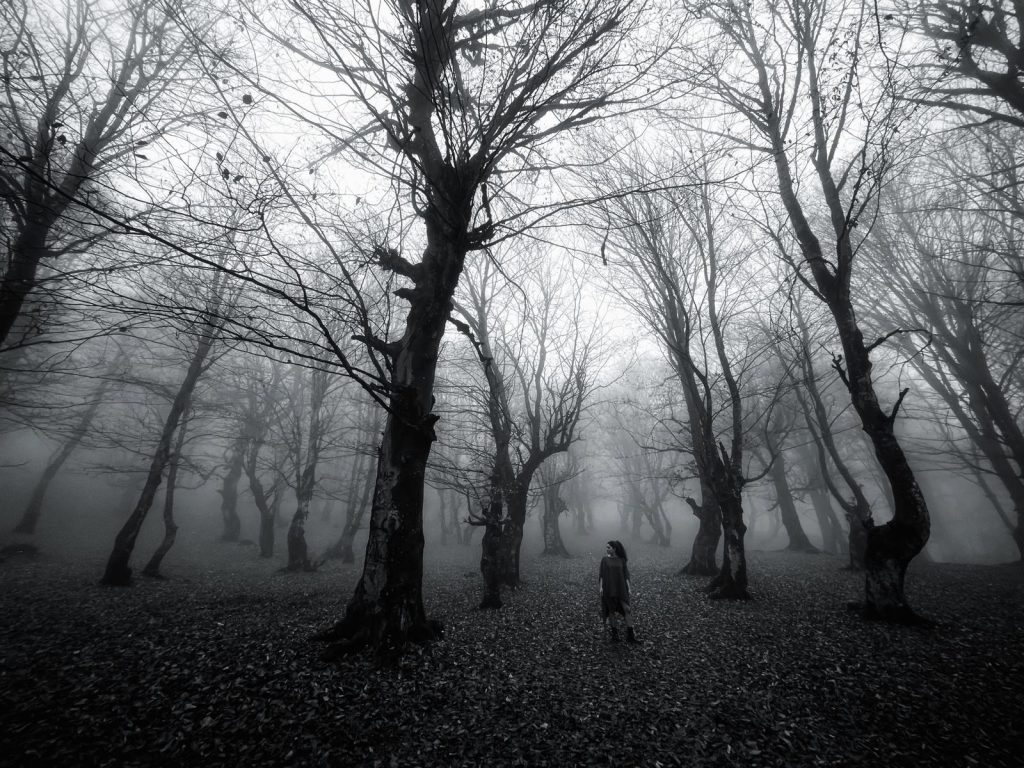
I’ve read quite a few vampire stories from Europe over the years, but the Dearg-Due has always felt a little different to me. She isn’t a count living in some enormous castle, and there isn’t much of the polished Gothic vampire about her. Her story is connected with Waterford, a terrible marriage, a young woman who didn’t get to choose her own life, and, eventually, a grave that people supposedly had to cover with stones.
The story usually begins with a young woman who was known for her beauty. She fell in love with a poor farm worker, but her father didn’t approve of the relationship. He had something else planned for his daughter. He wanted her to marry a wealthy man, so that’s what happened.
From everything I’ve read about the legend, the marriage was far from happy.
Her husband is usually described as cruel, while the young woman had very little control over what happened to her. She had been separated from the man she loved and forced into a marriage she never wanted. Some versions say she eventually stopped eating and wasted away. Other versions aren’t quite as specific about the circumstances of her death.
Eventually, she was buried.
You would think that would have been the end of the story.
It wasn’t.
According to the legend, she came back.
The first people she went after were the ones she blamed for destroying her life. Her father was one of them, and her husband was another. She supposedly drank their blood, and after that, her attacks continued.
That’s where the Dearg-Due starts to become the vampire most people recognize.
What I find interesting is how different this is from the vampires we’re used to seeing in movies. The Dearg-Due doesn’t need a castle, a black cape, or some ancient vampire family tree. At its simplest, she’s a dead woman who refuses to stay in her grave.
And that idea is much older than Dracula.
Across Europe, there are countless stories about people returning after they were buried. Sometimes the dead person was considered evil. Sometimes the death itself was strange or violent. Other times, nobody seemed to have a clear explanation for why the corpse had supposedly returned.
The fear wasn’t always about seeing a ghost floating through a house. In some old stories, the actual body was the problem.
That’s why I think the Dearg-Due fits so well into the older tradition of revenant stories.
One of the strangest details is what supposedly happened to her grave. According to the popular version of the story, stones were placed over it to prevent her from getting out.
That’s basically the solution.
No elaborate ritual. No special weapon. Just enough weight to keep the dead woman underground.
The legend has been associated with places around Waterford, including a location sometimes connected with Strongbow’s Tree or Strongbow’s Tower. The exact location isn’t always consistent, though. I’ve come across different versions of the story, and modern accounts don’t all agree on the details.
This is also where things get a little messy.
The Dearg-Due is often presented online as an ancient Irish vampire, and I’ve seen claims that the legend is thousands of years old. It sounds impressive, but I’m not convinced we can say that with any real confidence.
One of the early written sources people point toward is Dudley Wright’s Vampires and Vampirism, published in 1924. Wright described a female vampire associated with a graveyard in the Waterford area.
His version is interesting because it isn’t exactly the same story that gets repeated today.
The detailed story about the young woman’s unhappy marriage, the man she loved, her cruel husband and her eventual revenge became much more familiar through later retellings. And that’s something that happens with folklore all the time.
One person tells a story. Another person remembers it slightly differently. Someone adds a detail that makes more sense to them. Eventually, the newer version can start looking as though it has been around forever.
That doesn’t prove nobody told the story before 1924. Oral folklore is notoriously difficult to date because people weren’t exactly writing down everything their grandparents told them. It simply means I wouldn’t claim that the complete modern version is thousands of years old when the surviving written evidence doesn’t support that.
Her name is another interesting part of the story.
Dearg-Due is generally given meanings associated with blood, red blood, or blood drinking, although different spellings and translations appear depending on the source. That’s not particularly surprising for an Irish name that has passed through different written accounts over time.
What bothers me slightly about some modern versions is how quickly the woman herself disappears from the story.
Before she becomes the Dearg-Due, she’s a young woman who falls in love with a poor farm worker. Her father rejects him because he isn’t wealthy enough. She’s then married to someone else and supposedly suffers badly because of it.
Once she becomes a vampire, almost all of that gets pushed into the background.
The vampire takes over the story.
In some retellings, she targets men, particularly young men. That fits the revenge angle, at least in the beginning. Her father and husband were both men who had power over her, so it makes sense that they would become her first victims.
Eventually, though, the story moves beyond them.
Other people can become victims too.
And that’s the point where she stops being simply a tragic figure returning for revenge.
She’s hungry.
Personally, I think that’s what makes the legend work. If she had only returned from the grave to punish the two men who had ruined her life, the story would be tragic, but fairly simple. Instead, she keeps going. Whatever she was before her death has been replaced by something that needs blood.
That’s a much darker ending.
There’s also an interesting contrast in the way her life and death are described. While she was alive, other people decided where she would live, whom she would marry and what her future would look like.
After she dies, suddenly everyone else is afraid of her.
But she doesn’t really get her old life back.
The man she loved doesn’t rescue her. Her marriage isn’t undone. She doesn’t return to the life she wanted. Even revenge doesn’t seem to give her anything she actually lost.
All she gets is the grave and the hunger.
The story has obviously changed over time, and modern retellings have added plenty of details of their own. Some people describe the Dearg-Due simply as an Irish vampire. Others describe her more as a revenant, meaning a dead person who returns because something about their death or life remains unresolved.
If I had to choose, I’d say the second description fits the mood of the story better.
The blood drinking is obviously the part that makes people call her a vampire, but for me, the grave is more interesting.
A woman dies.
She’s buried.
And then people supposedly realize that burying her wasn’t enough.
They have to put stones over the grave because they’re afraid she might come back.
There’s something very old-fashioned about that kind of fear. It isn’t a monster from another world or an immortal aristocrat hiding behind the walls of a castle.
It’s just someone who died badly and apparently wasn’t finished with the living.
There isn’t any reliable evidence that a vampire is actually buried somewhere near Waterford, and I don’t think the complete story can honestly be traced back thousands of years from the surviving records.
Even so, the Dearg-Due has become one of the better-known vampire legends associated with Ireland.
Maybe that’s one of the things I like about folklore in general. The details don’t have to stay exactly the same for a story to survive.
Someone tells it.
Someone changes it.
Someone eventually writes it down.
And somehow, centuries or decades later, we’re still talking about the woman who supposedly came back from her grave.