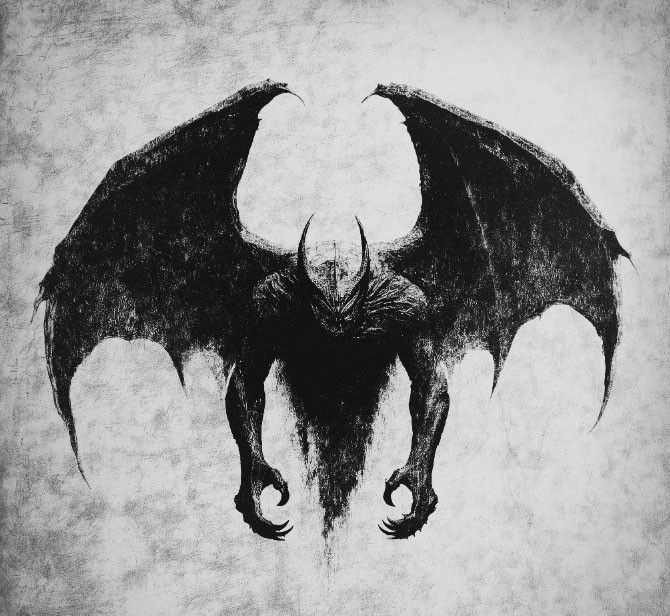
There are a lot of vampire stories around the world, but the Manananggal is one of those creatures that is difficult to forget once you hear the details. She isn’t a pale woman climbing out of a grave, and she doesn’t spend the night wandering around a castle. According to Filipino folklore, she can actually separate her upper body from her legs and fly away into the darkness.
That strange idea is what makes the Manananggal stand out.
The legend is especially associated with the Visayas in the Philippines, although stories about her and related creatures are found in other parts of the country too. The details can change depending on who is telling the story, which is pretty common with folklore.
Even the name Manananggal seems appropriate. It is connected to the word tanggal, meaning to remove or separate. In other words, the name itself refers to the rather unpleasant trick that makes this creature so unusual.
She Looks Like an Ordinary Woman
One of the more unsettling parts of the legend is that the Manananggal isn’t necessarily supposed to look frightening during the day.
In some stories, she can look like an ordinary woman. She may even be described as beautiful. Nobody in the village would necessarily know what she really was. She could go about her business during the day and then become something completely different after dark.
That part of the story gives the legend a different kind of fear. You aren’t necessarily looking for a monster with horns or claws. According to the folklore, the person sitting next to you could look perfectly normal.
Then night comes.
Stories say the Manananggal prepares herself before going out to hunt. She may rub oil or another substance over her body before separating at the waist. Her upper body then pulls away from her legs and rises into the night.
Wings appear from her back, usually described as large and bat-like. Some accounts also describe her intestines hanging beneath her detached torso as she flies. Meanwhile, her lower half is left behind wherever she began her transformation.
That is probably the strangest part of the whole story.
The Part of the Legend That Gives Her a Weakness
The Manananggal may be frightening, but the fact that she has to leave her lower body behind also gives people a way to fight back.
She eventually has to return.
According to some versions of the legend, someone who finds the abandoned lower half can interfere with the creature’s ability to reunite with it. Salt is one of the substances often mentioned. Other accounts include ash, garlic or holy water.
The basic idea is simple. If the Manananggal cannot get back into her body before sunrise, she is in serious trouble.
That is an interesting weakness because it comes directly from the thing that makes her terrifying. The creature can fly through the night looking for victims, but she can’t simply stay away forever. Eventually, she needs the body she left behind.
Some versions say that if she fails to reunite with herself before daylight, she will die.
Salt appears particularly often in accounts of the Manananggal. A Filipino legend recorded by the USC Digital Folklore Archives describes the creature separating from her legs at night and attacking pregnant women, with salt given as a way of preventing her from returning to the body. Another account mentions salt, holy water and garlic as protections.
These older collected accounts are interesting because they show that the Manananggal isn’t just something that appeared recently on internet lists of scary creatures. The story has been passed down through families and communities, with the details changing from one account to another.
Who Does the Manananggal Attack?
Pregnant women are among the most common victims in Manananggal stories.
The creature is sometimes said to enter homes while people are sleeping. Using a long, thin tongue, she may feed on the blood of a sleeping victim or target an unborn child.
Other versions of the folklore mention newlyweds, young couples or people who have been left alone.
There isn’t one official version of the Manananggal story, though. That’s worth keeping in mind when reading about Filipino folklore. Different communities have their own traditions, and supernatural creatures can overlap with one another.
Is the Manananggal Really a Vampire?
Calling the Manananggal a Filipino vampire isn’t completely wrong, but it doesn’t tell the whole story.
There are obvious similarities. She is active at night, attacks sleeping people and is associated with blood and other forms of feeding. Garlic and sunlight also appear in some versions of the stories.
But the Manananggal has a feature that most traditional vampires don’t have.
She can leave her legs behind.
That’s what makes her much more distinctive than simply calling her a vampire. Filipino folklore also has other vampire-like creatures, including the Mandurugo, which is sometimes discussed alongside the Manananggal.
The Manananggal has her own particular routine. She prepares herself, separates her body, flies into the night, searches for someone to attack and eventually has to return to the place where she left her legs.
It’s almost strangely practical for a supernatural creature.
And that practicality is part of what makes the legend creepy.
Why Capiz Is Often Mentioned
When people talk about Manananggal folklore, Capiz is one of the places that comes up most often. The province has become particularly associated with stories about the creature, although similar beliefs and related stories are found elsewhere in the Visayas, including Iloilo and Antique.
Children were sometimes told about creatures like the Manananggal to discourage them from wandering around outside at night. One account collected by the USC Digital Folklore Archives describes family members telling children about the creature partly to frighten them into being careful and not staying out late.
Another person recalled first hearing the story from relatives while visiting the Philippines as a child.
That kind of detail is easy to lose when folklore gets turned into a list of monsters on the internet. These weren’t necessarily stories people told just because they wanted a scary monster. They could also be part of family storytelling, childhood warnings and local traditions.
The Image That Makes the Legend So Unforgettable
For me, the strangest image in the Manananggal story isn’t even the wings.
It’s the legs.
Imagine walking past a house at night and seeing what appears to be a perfectly normal woman during the day. Nobody thinks much of her. Then, sometime after dark, according to the old story, she leaves her legs behind and flies away over the rooftops.
Somewhere else, a person might stumble across those legs without realizing what they are.
And that is where the story becomes almost bizarre rather than simply frightening. The creature that seems so powerful has left behind the one thing she desperately needs to survive until morning.
By sunrise, she has to be back.
Otherwise, the Manananggal may be trapped without the rest of herself.
That strange combination of horror and weakness is probably the reason the legend has stayed so memorable. The Manananggal isn’t just another vampire that comes out at night. She is a creature with a very specific way of hunting, a very specific vulnerability, and a story that has been passed down in different forms across Filipino communities.
And if you ever find yourself wondering whether the quiet woman living nearby is really as ordinary as she seems, the old folklore has a pretty disturbing answer.
Maybe you should check whether her legs are still there after dark.