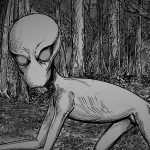
The Yukon Beaver Eater is one of those strange northern legends that sounds almost funny until you imagine meeting the thing in the middle of a dark Canadian forest. The name brings a very specific picture to mind: a creature roaming the wilderness of the Yukon, searching for beavers and leaving behind stories that are difficult to forget. But what exactly is the Yukon Beaver Eater, and where does this unusual name come from?
Canada’s northern wilderness has no shortage of stories about mysterious animals, enormous predators, and creatures supposedly seen by hunters far from the nearest settlement. The Yukon, with its endless forests, freezing rivers, mountain valleys, and long winter nights, is an ideal setting for tales like these. Some northern legends describe creatures that resemble familiar animals but behave in unexpected ways. Others speak of beasts that seem to belong somewhere between wildlife stories and local folklore.
The Yukon Beaver Eater fits neatly into that mysterious territory. Its name suggests a predator with a particular taste for one of Canada’s most recognizable animals. However, there is an important distinction to make from the beginning: the Yukon Beaver Eater is not a widely documented cryptid with a clearly established body of folklore. Reliable historical accounts explaining its origin, appearance, or a specific series of sightings are difficult to identify. Rather than inventing a detailed history and presenting it as established Canadian folklore, it is worth looking at the northern wilderness, the animals that inspired similar stories, and why a name like this feels so believable.
The Reported Encounter at Tatchun Lake
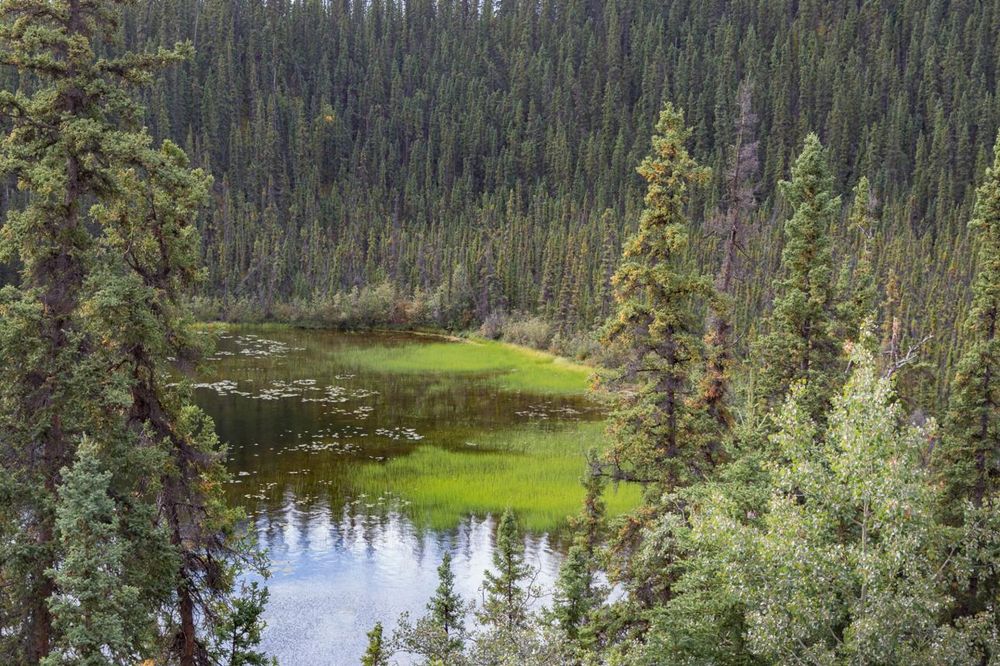
The best-known account connected with the Yukon Beaver Eater comes from the area around Tatchun Lake, near Carmacks in central Yukon. This is not a place where you can simply step outside and find a town on every corner. The surrounding landscape includes forest, rocky ground, lakes, and long stretches of wilderness where an unusual animal could disappear from sight surprisingly quickly.
In September 1989, Dawn Charlie contacted the British Columbia Scientific Cryptozoology Club (BCSCC) and shared information about a strange creature reportedly known in local tradition as the Saytoechin. Club co-founder Paul LeBlond later recorded the account in the club’s newsletter, published in 1990.
According to the report, one of the more recent encounters had been described by Violet Johny, Dawn Charlie’s sister-in-law. Violet had reportedly been fishing with her husband and mother near the head of Tatchun Lake several years earlier.
Then something came out of the woods.
The animal was described as standing around eight or nine feet tall and being larger than a grizzly bear. The group reportedly became frightened when it approached them. They fired several shots over its head and eventually managed to get their motor running so they could leave.
Imagine being on a quiet fishing trip, surrounded by the usual sights and sounds of the Canadian wilderness. You are concentrating on the water, perhaps watching the shoreline for movement. Then a huge animal emerges from the trees, stands taller than anything you would normally expect to encounter, and starts moving toward you.
That would be enough to make most people forget about fishing for the rest of the day.
The account also mentions another report involving a white man who allegedly shot a Beaver Eater near a small lake in the same general area. Unfortunately, the available retelling does not provide enough detail to establish who the man was, when the incident happened, or what became of the animal.
These reports are part of the reason the Saytoechin became known among cryptid enthusiasts. They give the story a specific geographical setting rather than leaving it as a vague tale about something supposedly living somewhere in northern Canada.
What Does the Yukon Beaver Eater Look Like?
Descriptions of the Yukon Beaver Eater are surprisingly inconsistent, which is common with creatures that have been passed along through multiple reports and later retellings.
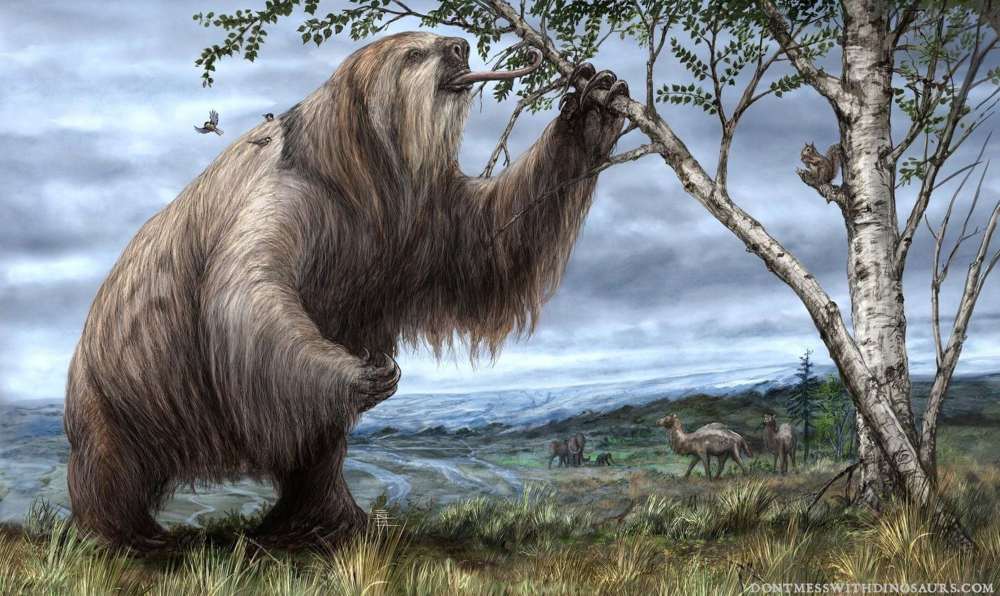
The central claim is straightforward: it is an enormous, powerful animal, reportedly bigger than a grizzly bear. Some modern cryptid descriptions add a thick body, long claws, shaggy fur, and a tail that would look unusual on a bear.
It is also often said to be capable of standing upright on its hind legs. Depending on which account you read, its height can exceed ten feet when standing this way.
The trouble is that not every one of these details appears in the earliest available report. The original account is much shorter than many modern descriptions, so it is worth separating the basic reported encounter from the extra features added in later versions.
Even so, the general picture is easy to imagine: a massive, heavy-bodied creature moving through the Yukon forest, with powerful forelimbs capable of tearing apart a beaver lodge.
It would not need to look like a monster from a horror movie to be frightening. A large animal with the strength to overturn heavy timber and the ability to move through thick vegetation would be intimidating enough.
Why Does It Resemble a Giant Ground Sloth?
The ground sloth connection is probably the most interesting part of the entire story.
According to accounts repeated by cryptozoological researchers, people familiar with the creature were shown illustrations of extinct animals and selected a picture of a giant ground sloth as the closest match. The original book and exact illustration have not been firmly identified, so the comparison should be treated as a reported detail rather than a fully documented identification.
Giant ground sloths were real animals. They lived across parts of the Americas during the Ice Age, and some species were enormous compared with modern sloths.
Now imagine seeing an illustration of one of these animals without knowing much about prehistoric mammals. Its body shape, long claws, and heavy build could easily bring to mind an animal that might dig into a structure or tear apart a pile of branches.
There is one major problem with the theory, though. Known giant ground sloths were primarily plant-eaters, not specialized predators that hunted adult beavers. A surviving ground sloth would therefore require a more complicated explanation than simply matching the creature’s outline to a fossil illustration.
Still, the resemblance is the reason the ground sloth theory remains attached to the Yukon Beaver Eater. It offers a possible prehistoric identity for an animal that otherwise has very few clearly established physical characteristics.
And honestly, the idea of a giant Ice Age mammal surviving in a remote northern forest is exactly the sort of possibility that keeps cryptid stories alive.
How Does the Beaver Eater Hunt Beavers?
The creature’s name comes from the way it supposedly hunts its favorite prey. According to the traditional description repeated in cryptid literature, the Beaver Eater attacks beaver lodges, overturning or breaking into them to reach the animals inside.
This is an unusual hunting method, but it makes sense as part of the legend. Beavers build sturdy lodges from branches, sticks, and mud, often with underwater entrances. Their homes are designed to protect them from predators, and reaching the animals inside is not always easy.
A creature large enough to damage a lodge would have a significant advantage. Instead of waiting for a beaver to leave the water, it could attack the structure itself.
Of course, the story does not explain exactly how the Beaver Eater catches its prey, how often it hunts, or whether it eats anything else. Some modern descriptions present beavers as its main food source, while other details about its diet are less firmly established.
The name nevertheless gives the creature a distinct identity. Plenty of cryptids are described as mysterious, huge, or dangerous. The Yukon Beaver Eater has a particular habit attached to it, and that makes the story easier to remember.
Could a Real Animal Hunt This Way?
Several animals already hunt beavers, including wolves and bears. They generally take advantage of opportunities to catch beavers outside their lodges or in the water. A bear is also strong enough to damage wooden structures.
The Beaver Eater legend takes this familiar relationship between predator and prey and pushes it much further. Instead of a bear occasionally attacking a beaver, it describes a huge animal apparently specializing in finding and breaking into beaver homes.
There is also an interesting detail about the Yukon landscape. The region contains plenty of lakes, streams, wetlands, and forested areas suitable for beavers. The Yukon government identifies the American beaver as an established part of the territory’s wildlife, with lodges and dams among its most recognizable signs.
If an unknown animal really lived in this environment, its movements might follow waterways and the animals living around them. That is a reasonable way to imagine the creature within the legend, although it does not establish that the Beaver Eater exists.
Where Does the Yukon Beaver Eater Live?
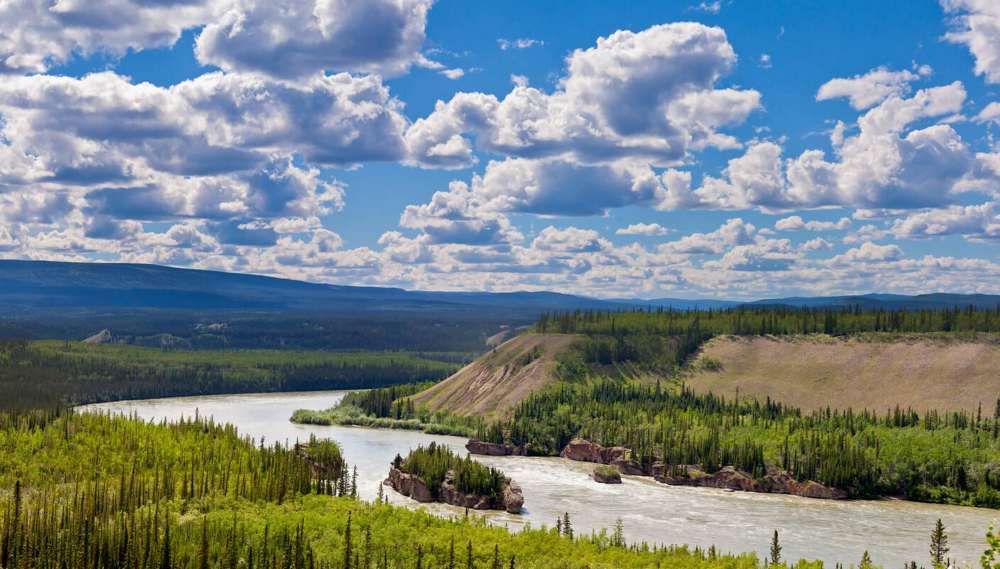
The Beaver Eater is associated with the mountainous country around Frenchman Lake and the Tatchun Lake area, east of Frenchman Lake, according to the early report.
This is important because the creature is not usually described as a wandering beast that travels across all of Canada. Its reported home is a particular part of Yukon, where forest, water, and rugged terrain meet.
The northern wilderness has a reputation for hiding animals from human view, and for good reason. Even familiar wildlife can be difficult to observe when it spends most of its time in dense vegetation or moves around at night.
The Yukon is also a place where a trip away from settlements can quickly feel isolated. Long distances, changing weather, and thick woodland can make an ordinary journey feel like an expedition. When a strange animal is reported in such a setting, the landscape becomes part of the story.
Picture a narrow trail running between spruce trees, with a lake just beyond the forest. The water is quiet, and the only obvious signs of life are branches moving in the wind or ripples near the shoreline. A large shape appears between the trees, but before anyone can get a clear look, it disappears into the woods.
That is the kind of setting in which the Beaver Eater legend works best. It is not a creature associated with city streets or crowded tourist attractions. Its story belongs to the remote corners of the Canadian wilderness.
Could the Beaver Eater Be an Extinct Animal?
The giant ground sloth is the most famous proposed explanation, but it is not the only animal mentioned in discussions of the cryptid.
Some writers have suggested that the creature could be an unusually large bear or a surviving member of an extinct group of large mammals. Others have discussed prehistoric giant beavers as another possible source of confusion. These remain suggestions rather than established explanations.
The ground sloth idea is particularly tempting because it connects the story with an animal that really did live in prehistoric North America.
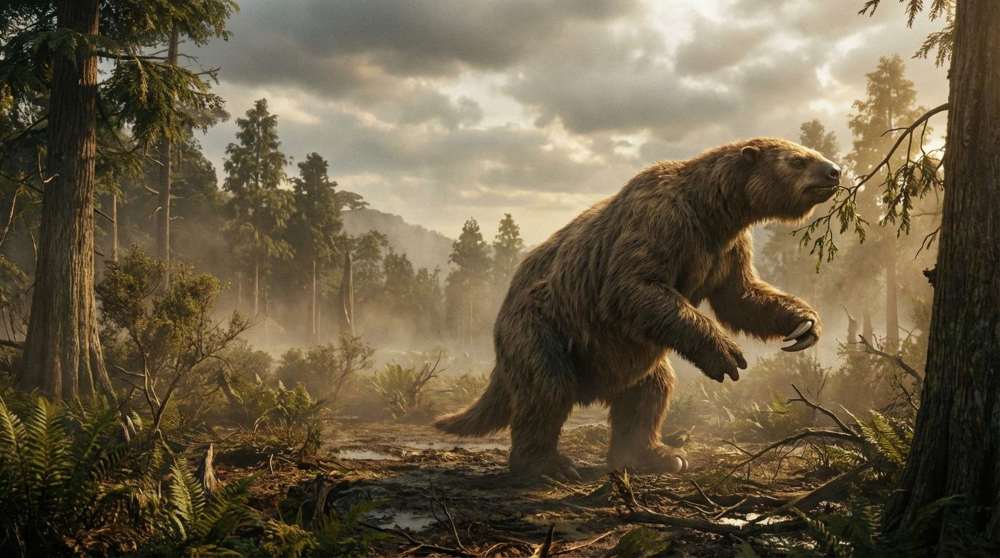
Imagine a large ground sloth surviving long after its relatives disappeared. It would be an extraordinary discovery, especially if it lived in a remote region where sightings were rare. Its size and claws might explain why someone described it as larger than a bear.
But the details of the legend do not fit neatly with what is known about ground sloths. Their established diet was largely plant-based, and there is no accepted evidence that a living population of giant ground sloths survives in modern Yukon.
That does not make the historical comparison uninteresting. It simply means the resemblance between an illustration and a reported creature cannot tell us whether they are the same animal.
The possibility of a prehistoric survivor is one of the reasons the Beaver Eater attracts attention among cryptid enthusiasts. It turns a brief encounter into a much larger question about the animals that once lived in North America and how people remember them.
The Difference Between the Beaver Eater and Other Canadian Cryptids
Canada has plenty of mysterious creatures in its folklore and cryptid literature. Some are described as enormous aquatic animals, while others resemble wolves, bears, or unfamiliar forest creatures.
The Yukon Beaver Eater stands out because its story combines three distinctive details:
- Its size: The creature is reportedly larger than even a big grizzly bear.
- Its behavior: It is associated with breaking into beaver lodges to reach its prey.
- Its prehistoric resemblance: The reported comparison with a giant ground sloth gives it a possible connection to Ice Age wildlife.
These details make the Beaver Eater different from a generic story about an unidentified animal. Its name, habitat, and supposed hunting behavior all belong together.
There is also a difference between the early account and the elaborate creature profiles found online today. The original report provides a brief description of an encounter, while later articles often add more anatomical details and theories about what the animal might be. Keeping those layers separate helps preserve the most interesting part of the story without turning guesses into facts.
Final Thoughts on the Yukon Beaver Eater
The Yukon Beaver Eater, also known as the Saytoechin, is a strange cryptid with a relatively small collection of reported encounters but an unusually memorable identity.
Its story centers on an enormous animal said to roam the wilderness near Tatchun Lake and the Frenchman Lake area. The reported encounter involving Violet Johny describes a frightening animal emerging from the woods and approaching a fishing party. Other versions connect the creature with attacks on beaver lodges and a resemblance to a giant ground sloth.
The ground sloth connection is what makes this particular cryptid especially intriguing. Unlike a creature with no obvious counterpart in the natural world, the Beaver Eater has been compared with a real group of prehistoric mammals that once lived across the Americas.
Whether you are interested in Canadian folklore, mysterious animals, or the strange possibilities suggested by prehistoric wildlife, the Saytoechin is an unusual addition to the world of cryptids.
And there is something fitting about a creature supposedly living in one of Canada’s remote wilderness regions. The Yukon has plenty of room for strange stories, and the Beaver Eater remains one of its more unusual mysteries.
Sources and further reading
ShukerNature — The Yukon Beaver Eater, and Ground Sloths in New Zealand?