I have always found the older vampire stories more interesting than the ones that came later. Dracula is obviously the famous one, but European folklore is full of strange stories about the dead returning to trouble the living. One of the most unusual I came across is the Abhartach story, an old Irish tale involving a man who apparently refused to stay dead.
The name Abhartach does not have the same recognition as Dracula or Nosferatu, which is probably part of why I found the legend so interesting. It feels less polished and much closer to the kind of story people might have told each other in a small village hundreds of years ago.
Who Was Abhartach?
The story places Abhartach somewhere in what is now Northern Ireland, particularly around County Derry. He is generally described as a cruel and unpleasant local ruler, although details differ between versions of the legend.
According to the traditional account, another local ruler eventually killed Abhartach and buried him. That should have settled the matter. Instead, Abhartach came back.
He returned to the people who had been afraid of him during his lifetime and demanded blood. The exact details change depending on the version, but this is where the story starts looking remarkably similar to later vampire folklore.
The people thought they had finally gotten rid of him, only to discover that killing him once was apparently not enough.
The Abhartach Grave
The strangest part of the story concerns the Abhartach grave.
After Abhartach returned, he was killed and buried again. Yet somehow he appeared once more. The man responsible for killing him eventually sought advice because ordinary methods clearly were not working.
The instructions he received were unusual. Abhartach supposedly had to be killed again and buried in a particular way, with his body placed upside down and heavy stones used to keep him in the grave.
It sounds like something from a modern horror film, but old folklore often contains surprisingly practical solutions to supernatural problems.
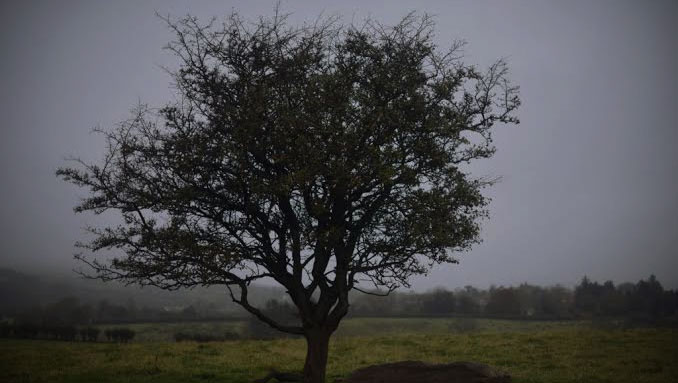
There is also a supposed Abhartach Burial Site in County Derry that has become connected with the legend. Whether this is genuinely the grave described in the story is another matter. A location associated with an old legend can easily become part of the story itself over generations.
I would not consider the grave evidence that Abhartach was real. Still, knowing that there is a real place associated with the tale makes the whole thing a little more unsettling.
Abhartach and the Irish Vampire
The reason people still talk about Abhartach today is mainly because of his connection with the idea of an Irish vampire.
The story contains several elements that sound familiar to anyone interested in vampire folklore. A dead man returns from his grave, attacks the living, and is associated with blood. His death also requires unusual measures before the villagers can finally feel safe.
There is even discussion about whether the Abhartach vampire story could have influenced later vampire fiction.
That claim is difficult to prove, though.
The writer Patrick Weston Joyce recorded a version of the story, and later writers connected Abhartach with vampire traditions. Some have gone further and suggested that Bram Stoker may have known the legend when writing Dracula.
It is a fascinating possibility, but there is no clear evidence showing that Stoker actually based Dracula on Abhartach.
What Were Abhartach’s Powers?
The Abhartach powers are fairly simple compared with those of modern fictional vampires. His most frightening ability was apparently his return from death.
He could be killed and buried, yet somehow appear again. The story also connects him with drinking blood or demanding blood from his victims.
Modern retellings sometimes talk about an Abhartach bite, but this is one detail I would be cautious about. The older versions do not necessarily describe him as biting people in the familiar Dracula-style manner.
That distinction matters because folklore changes.
A story told around a fire in rural Ireland could be retold very differently by someone writing it down centuries later. Details get added, removed, or changed, especially when people begin comparing an old legend with newer ideas about vampires.
Abhartach in Irish Mythology
Looking at Abhartach Irish mythology is interesting because the story does not really resemble the elegant vampire image that became popular later.
There is no romantic immortal aristocrat here. Instead, there is a frightening figure from the Irish countryside, a troubled community, and a grave that apparently cannot keep its occupant underground.
That makes the story feel much closer to traditional Irish folklore.
In fact, the legend raises a question I often have when reading old Irish mythology. Was Abhartach originally supposed to be a supernatural creature, or was the story built around a real person whose reputation became stranger over time?
We probably will never know.
There are theories that the original Abhartach may have been an actual local ruler whose story was gradually transformed into something supernatural. There are also arguments that the tale belongs more naturally to older traditions concerning the restless dead.
Neither explanation can be proven with certainty.
Why Has the Story Survived?
There is something strangely appealing about the Abhartach legend because it does not give you a neat explanation.
Was he an ancient vampire? Was he simply a cruel man whose death inspired a frightening story? Or did later storytellers turn an old burial tradition into something much darker?
Even the idea of the walking dead feels different here from modern zombie stories. Abhartach is not an army of corpses. He is one particular dead man who keeps returning, which somehow makes the story feel more personal.
I have seen the name mentioned in discussions about an Abhartach movie, vampire history, and the origins of vampire folklore, but I think the legend works better when it remains relatively obscure.
Maybe that’s because obscurity leaves room for imagination.
The next time I read about an old grave somewhere in Ireland, I know I will wonder about the person beneath it. Most graves are simply graves. But according to this particular piece of Irish vampire folklore, there was once a man who was buried more than once and apparently needed rather more than a coffin to keep him there.
That is a much older kind of vampire story, and personally, I find it far creepier than another story about a count in a castle.