Forests are full of stories about strange things people supposedly saw when they were alone. Someone hears a voice between the trees. Someone else spots a woman standing near a stream, even though there are no houses anywhere nearby. Usually, these encounters have a simple explanation. At least, that is what we tell ourselves.
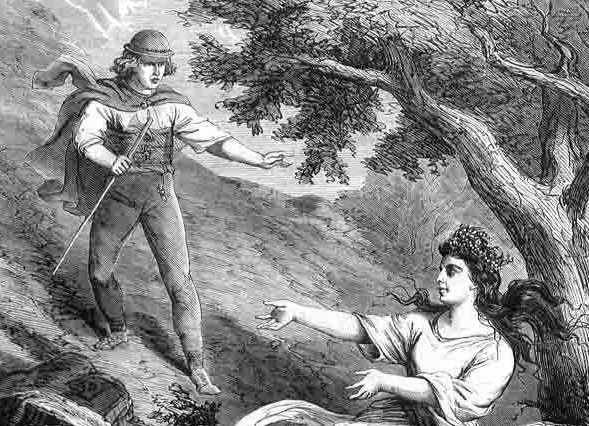
In Czech and Moravian folklore, however, there were stories about women who supposedly belonged to the wilderness itself. They were called Divoženky, and they weren’t quite like ordinary women. Some stories described them as helpful, some made them sound downright unpleasant, and others left you wondering why anyone would want to go anywhere near them in the first place.
What I find interesting about these creatures is that they weren’t always doing anything particularly frightening. They might bake bread, spin thread, or go about their own business in the forest. That’s almost more unsettling than the stories where they simply attack somebody. Imagine finding a little house hidden among the trees, with smoke coming from the chimney, only to discover that the woman inside isn’t exactly human.
Of course, these are folklore stories, and the details change depending on where they were told. Still, the Divoženky are worth looking into if you enjoy the stranger side of Slavic mythology.
Women Who Lived Beyond the Village
The name Divoženky is associated with wild women in Czech and Moravian traditions. Similar figures appear in other parts of Central Europe, although they aren’t all exactly the same. Polish folklore, for example, has the Dziwożony, while Lusatian Sorbian traditions includ e the Džiwje Žony.
The names sound related, and the stories share certain features, but it would be a mistake to assume every version describes one identical creature.
The Divoženky were generally associated with remote places, particularly forests, mountains, and areas away from human settlements. They weren’t necessarily hiding in caves waiting for travellers to come along. Some accounts describe them as having homes of their own, where they cooked, worked, and lived much as people did.
That detail has always struck me as one of the stranger parts of the folklore. These weren’t just mysterious figures appearing out of nowhere to frighten someone before disappearing into the mist. In some stories, they had ordinary routines. They made things, prepared food, and apparently had no shortage of work to do.
The difference was that their homes belonged to a world people didn’t fully understand.
A woman gathering plants in the woods might not seem particularly unusual. Neither would someone baking bread or carrying a bundle of sticks. But what if there was no village nearby? What if the person you met didn’t look quite right, or seemed to know things she shouldn’t know?
That was the sort of uncertainty these stories played with.
What Did Divoženky Look Like?
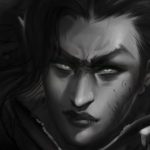
There wasn’t one agreed description. Some accounts portrayed wild women as fairly human-looking, while others gave them strange features that made them difficult to mistake for ordinary people.
Descriptions in regional folklore could include long, loose hair, unusually large heads, hairy bodies, or exaggerated facial features. Their clothing might resemble the simple garments worn by rural women, although some versions made their appearance much more unusual.
Naturally, the details vary. Not every Divoženka was described as hairy, and not every wild woman in Slavic folklore had the same face or body. Some of the stranger physical traits belong to neighbouring traditions and shouldnautomatically be attributed to every Czech or Moravian account.
Still, there is something rather creepy about a creature that looks almost normal.
A monster with claws and horns gives itself away. A woman standing at the edge of a field doesn’t. You might walk straight past her without giving her a second thought. Perhaps she would even speak to you, asking where you were going or whether you had anything to eat.
Then you notice something odd.
Maybe it’s her face. Maybe it’s the way she looks at you. Or perhaps there’s nothing obviously wrong at all, which leaves you wondering why you suddenly feel so uncomfortable.
Folklore doesn’t always need to explain exactly what made a creature frightening. Sometimes the descriptions are enough to suggest that something about it wasn’t quite right.
They Could Bake Bread and Spin Thread
One thing that separates the Divoženky from the usual image of a forest monster is their connection with everyday work.
Some stories about wild women describe them baking bread, preparing food, gathering grain, or making clothes. They could be associated with spinning and other forms of textile work, too. These were ordinary activities in rural life, but the idea that supernatural women were doing them in hidden woodland homes gave them a strange twist.
Think about finding the smell of freshly baked bread in the middle of a forest. You follow it, expecting to find a farmhouse or perhaps a group of people camping nearby. Instead, you discover a rocky hollow or a little shelter where nobody should be living.
There are signs that someone has been there. Perhaps a fire has recently burned out. Maybe there is food inside.
And then a woman appears.
In some traditional stories, encounters with wild women could end well. Someone who treated them kindly might receive help or a reward. Other accounts warned that greed or disrespect could bring trouble.
It wasn’t simply a case of every supernatural creature being evil. The Divoženky could be helpful, but that didn’t mean they were safe to deal with.
There was also the question of what they expected in return. Peopl
e living in small rural communities understood the importance of sharing food and helping neighbours. But an encounter with a mysterious stranger wasn’t the same as borrowing a tool from the family next door.
You couldn’t necessarily know what rules applied.
The Forest Wasn’t Always Friendly
A lot of folklore about wild women involves people getting into trouble after wandering away from familiar places.
The forest was a practical part of rural life. People entered it to collect wood, find food, tend animals, or travel between settlements. But forests could also be dangerous, particularly for anyone who didn’t know the area well.
It was easy to lose your bearings. Paths disappeared beneath vegetation, landmarks looked similar, and bad weather could turn an ordinary walk into a miserable experience.
Stories about supernatural beings offered another explanation for these dangers.
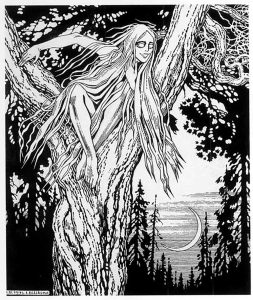
Wild women in regional folklore were sometimes associated with confusing travellers, leading people astray, or making familiar places seem strange. A person might leave a path and struggle to find it again. Someone who thought they were heading home could end up walking deeper into the woods.
Of course, getting lost doesn’t require supernatural intervention. But imagine trying to explain what happened before modern maps, reliable lighting, or any easy way of contacting someone for help.
A story about a wild woman who lured people away from safety would have made sense to listeners who knew how quickly a journey could go wrong.
Other tales portrayed related wild women as more directly hostile. They might punish people who offended them or bring misfortune upon those who behaved greedily.
The important thing is that their behaviour wasn’t always predictable. You couldn’t assume that an encounter would be friendly just because the woman initially seemed harmless.
The Stories About Stolen Children
Some of the darker traditions surrounding wild women involve newborn children.
Across European folklore, there are many stories about supernatural beings stealing babies and leaving substitutes behind. These supposed replacements are commonly known as changelings. Related beliefs appear in stories about wild women, although the details vary between regions and creatures.
In these tales, a child might suddenly become sick or behave in a way that frightened the family. Rather than understanding the illness, people sometimes blamed a supernatural exchange.
It’s an uncomfortable subject, but it helps explain why certain creatures became so frightening in traditional stories. A forest spirit wasn’t necessarily a distant problem. According to some beliefs, it could enter a household and threaten the people living there.
Childbirth was dangerous in earlier centuries, and families had very real reasons to fear losing a newborn. Without modern medical knowledge, an illness could be difficult to explain. Folklore provided an answer, even if it was a frightening one.
We shouldn’t treat these stories as evidence that supernatural beings actually stole children. They tell us much more about the fears and uncertainties of the communities that passed them on.
It’s also worth remembering that child-stealing isn’t a feature of every Divoženky story. It belongs to the wider collection of European beliefs about wild women and other supernatural beings.
Even so, it adds a darker side to their reputation. The same type of figure that might bake bread in a hidden forest home could, in another story, become a threat to an entire family.
Singing in the Woods
Not every encounter with a wild woman began with something obviously frightening.
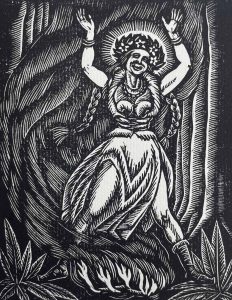
Some traditions involving wild women describe singing, dancing, and gatherings in remote places. Similar motifs appear in other European folklore, where supernatural beings attract people with music or invite them to join a celebration.
There’s something unsettling about that idea because it starts with curiosity rather than fear.
Imagine hearing music somewhere among the trees. You can’t see anyone, but the sound is clear enough to make you stop. Perhaps it’s coming from a clearing just beyond the path.
You take a few steps towards it.
Then a few more.
Before long, the place where you heard the music is behind you, and you’re no longer sure how to get back to the road.
That little scenario isn’t a claim about one specific Divoženky legend. It’s the sort of situation that makes the wider folklore understandable. Stories about strange music and supernatural gatherings often warned people about following things they couldn’t explain.
Some related traditions connected wild women with particular seasons or times of the year. The details weren’t identical everywhere, so it’s difficult to establish one set of rules that applied to all of them.
What remains consistent is the idea that certain places could become unfamiliar very quickly. A forest that seemed ordinary during the day might feel entirely different once the light began to fade.
Were They Fairies, Witches, or Something Else?
It’s tempting to group Divoženky together with every other female supernatural creature in European folklore. They do share features with figures commonly described as fairies, forest spirits, and witches.
But those labels can be misleading.
A fairy in a modern fantasy story might be beautiful, tiny, and capable of using magic. A witch is usually understood as a human being who practises magic, although traditional beliefs vary considerably. Divoženky, by contrast, belong to regional traditions about wild women who exist outside ordinary human society.
They weren’t necessarily tiny or beautiful, and they weren’t simply women who had learned supernatural tricks.
Their connection with the wilderness is particularly important. They could live beyond the village, perform familiar tasks, and occasionally interact with humans, but they remained separate from the normal social world.
There are also similarities between Divoženky and the Polish Dziwożony. Both are associated with wild female beings, and some stories about related figures involve children, unusual physical characteristics, or encounters in remote places.
However, similar names and overlapping stories don’t prove that every detail comes from one ancient source. Folklore changes as it passes between communities, and later storytellers can add features borrowed from neighbouring traditions.
That makes the subject a little messy, but that’s how folklore tends to work. There isn’t always one original version waiting to be uncovered.
Why I Find These Stories Interesting
The Divoženky don’t need a complicated mythology to be memorable.
What makes them interesting is the way they blur the line between the ordinary and the strange. They could cook, work, and live in houses, yet their homes were hidden in places where people didn’t expect to find anyone. They could be helpful, but kindness didn’t guarantee that everything would end well.
They also reflect the relationship people had with the landscape around them. A forest wasn’t just a collection of trees. It was somewhere people worked, travelled, gathered food, and occasionally got lost. It could provide what a household needed, but it could also become dangerous.
Stories about wild women gave that landscape a personality of its own.
I think that’s more interesting than simply describing them as evil creatures lurking among the trees. In some accounts, they weren’t even trying to harm anyone. They were just living their own lives, and humans were the ones who wandered into their territory.
Of course, other stories made them much more threatening. That’s part of the appeal: there isn’t one tidy description that covers every version.
The Divoženky remain figures of regional folklore rather than creatures with one universally accepted origin story. The surviving accounts differ, and some details belong to related traditions rather than to every Divoženky legend.
But the basic image is easy to understand. Somewhere beyond the last village, a woman lives in the forest. She knows how to bake bread, spin thread, and go about her daily business. She might help a stranger who comes across her home, or she might decide that the stranger has no business being there.
And unless the old stories are wrong about one thing, it would probably be best not to assume you know which kind of woman you’ve met.