Hinoenma mythology tells the story of a beautiful woman whose charm hides something far more dangerous than anyone could imagine. In Japanese folklore, Hinoenma is associated with temptation, destruction, and the terrible consequences of losing yourself to desire. She is often described as a woman so attractive that men cannot resist her, only to discover too late that getting close to her may cost them everything.
What makes Hinoenma interesting is that her story is not simply about a monster hunting its victims. There is also a darker message behind it, one that reflects the beliefs and fears of the society in which the legend developed. And honestly, that is what makes her more interesting than another creature that appears in the dark and attacks people.
So, who exactly is Hinoenma, where does her legend come from, and why has this dangerous woman remained part of Japanese supernatural folklore?
Who Is Hinoenma?
Hinoenma, also known as Hienma, is a female supernatural figure found in Japanese folklore. Her name is written with the characters and she is associated with dangerous relationships, irresistible beauty, and personal ruin.
Descriptions of Hinoenma usually focus on the contrast between her appearance and her true nature. She looks like an exceptionally beautiful woman, sometimes described in terms that suggest the grace of a Buddhist figure. However, beneath that attractive appearance lies something frightening and destructive.
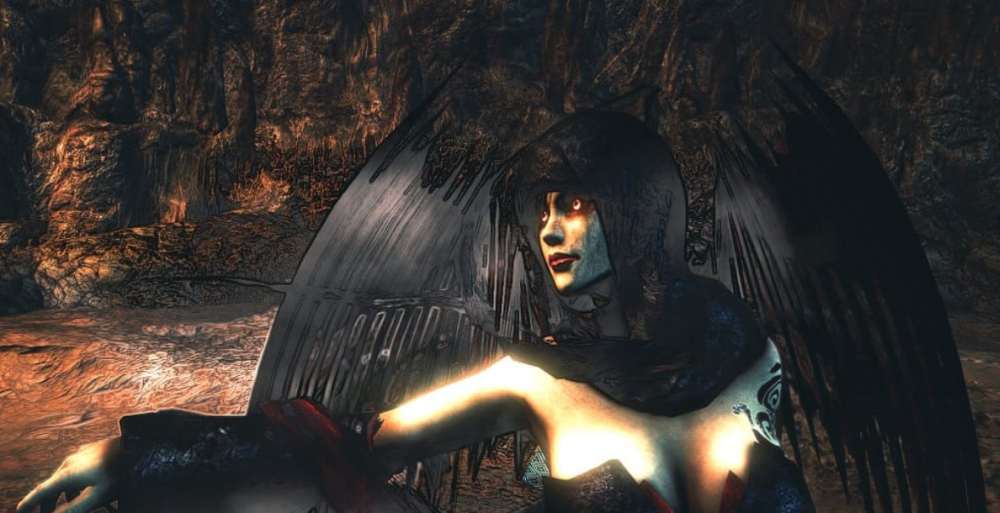
In later descriptions, Hinoenma is portrayed as a woman who seduces men and drains their blood or life force. Her victims become so fascinated by her that they fail to recognize the danger until it is too late. Some versions present her almost like a vampire, although her place in Japanese folklore is not exactly the same as that of the vampires found in European stories.
However, there is an important detail worth knowing. Hinoenma is not best understood as a creature with one fixed appearance and a long collection of identical encounters. Her traditional story is closely connected to a moral warning about desire and the danger of allowing attraction to control your life.
That distinction matters because many modern websites describe her as if she were a well-documented monster with a complete biography, a list of supernatural powers, and a standard method of killing her victims. The older material is more complicated than that.
The Origins of Hinoenma Mythology
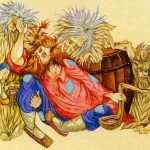
One of the most important sources connected to Hinoenma is Ehon Hyaku Monogatari, a Japanese collection of strange tales associated with the Edo period. The work was published in 1841 and is linked to the writer known as Momokawa Shōzan.
The collection belongs to a period when stories about strange creatures, unexplained events, and frightening encounters were popular subjects in Japanese books and entertainment. These stories were not always intended to frighten readers for entertainment alone. Some also reflected religious ideas, social expectations, and the everyday fears of the people who told them.
Hinoenma fits into this tradition particularly well.
Her story was connected to Buddhist warnings about sexual desire and the danger of allowing physical attraction to lead someone away from a disciplined life. In the traditional account, her beauty represents the kind of temptation that can make a person forget everything else.
The warning is quite direct: a person who becomes obsessed with desire may eventually lose their wealth, reputation, family stability, and even their life.
It is a very different approach from a modern horror story. Instead of beginning with a mysterious death or a haunted house, the legend begins with a weakness in human nature.
And that weakness is something most people can understand, even if they do not believe in supernatural creatures.
A Beautiful Face Hiding a Terrible Nature
The most memorable part of Hinoenma mythology is the difference between what people see and what she really represents.
Imagine meeting a woman who seems almost impossibly perfect. She speaks gently, behaves gracefully, and attracts attention without appearing to make any effort. Nothing about her immediately suggests danger.
At first, there might be nothing unusual about the encounter. A man meets her, becomes interested in her, and starts spending more time with her. He may ignore his responsibilities or begin making decisions he would normally avoid.
As his fascination grows, his judgment becomes weaker.
This is where the horror of Hinoenma begins. The danger does not necessarily arrive with claws, fangs, or a frightening transformation. Instead, it grows quietly while the victim convinces himself that everything is under control.
Traditional descriptions compare her outward appearance to a bodhisattva while comparing her inner nature to a yaksha, a fearsome supernatural being in Buddhist traditions. The contrast is deliberate. She appears peaceful and almost divine, but her true nature is dangerous.
There is something unsettling about this idea because it plays with a fear that appears in many cultures: the possibility that a person can look completely trustworthy while hiding a destructive side.
Of course, beauty itself is not evil, and the story should not be taken as proof that attractive people are dangerous. The point of the legend is the gap between appearance and reality, and the way obsession can prevent someone from seeing that gap.
Does Hinoenma Drink Blood?
If you search for Hinoenma online, you will often find descriptions of a beautiful woman who seduces men before drinking their blood. Some accounts also say that she drains their life energy until they die.
This is the version that makes her sound most like a supernatural predator.
However, it is useful to separate the familiar modern description from the older moral meaning of the legend. The traditional account associated with Ehon Hyaku Monogatari places strong emphasis on desire, temptation, and the destruction that follows. The more detailed image of a blood-drinking female monster is common in later summaries and retellings, but not every detail should be treated as an established part of the original story.
That does not make the blood-drinking version any less effective as horror.
Think about the idea behind it. Hinoenma does not simply attack someone in an alley. She draws the victim toward her willingly. The person who eventually suffers is also the person who kept coming closer, believing that the attraction was worth the risk.
In a modern horror story, this could easily become a tale about a man who meets a mysterious woman in a quiet bar, begins seeing her regularly, and slowly notices that something is wrong. Perhaps he becomes exhausted after every meeting. Perhaps his friends notice that he looks ill. Perhaps he starts losing interest in everything except seeing her again.
Those details would make an effective fictional retelling, but they should be understood as creative additions rather than documented events from Hinoenma’s original legend.
The central idea remains the same: the closer the victim gets, the harder it becomes to escape.
The Connection Between Hinoenma and Hinoeuma
There is another interesting theory connected to Hinoenma: the possible relationship between her name and the Japanese belief surrounding Hinoeuma.
Hinoeuma refers to a particular combination in the traditional Japanese sexagenary calendar, which combines the heavenly stems and earthly branches into a cycle of sixty years. The year is associated with the Fire Horse.
According to a longstanding superstition, women born in a Hinoeuma year were believed to possess strong or dangerous personalities and, in some versions of the belief, to bring misfortune to their husbands.
This superstition had real social consequences. Women could face prejudice because of the year in which they were born, even though the belief had no factual basis.
Some interpretations suggest that Hinoenma may be connected to these ideas, with the supernatural woman serving as a frightening expression of anxieties about female independence, sexuality, and marriage.
The connection is interesting, but it should not be presented as a proven explanation of the legend’s origins. The exact relationship between the name Hinoenma and the Hinoeuma superstition is uncertain, and different sources discuss it in different ways.
Still, the comparison tells us something important about the world in which these stories circulated.
Folklore does not develop in isolation. It often takes existing beliefs and fears and turns them into memorable characters. In this case, a supernatural woman who brings destruction may reflect more than a fear of monsters. She may also reveal the social attitudes of the people who told the story.
That is one reason old legends can be fascinating even when their supernatural claims cannot be verified.
Why Was Hinoenma Considered Dangerous?
Hinoenma’s danger is usually described in two connected ways.
The first is physical destruction. In versions that portray her as a blood-drinking figure, getting close to her can lead directly to death. Her beauty becomes a trap, and her victim has little chance once her true nature is revealed.
The second is the destruction of a person’s life before death ever becomes a possibility.
In the older moral interpretation, a man who becomes consumed by desire may neglect his duties, waste his money, damage his relationships, and bring trouble upon his household. He might believe that he is following his heart, but the story presents him as someone who has lost control of his own decisions.
This is where Hinoenma differs from many familiar monsters.
A creature that breaks into a house can be avoided by locking the doors. A dangerous animal can sometimes be escaped by keeping your distance. Hinoenma’s greatest weapon, however, is the victim’s own attraction.
The victim does not necessarily see himself as being hunted. He may think he has found something wonderful.
That makes the legend uncomfortable in a different way. The danger is hidden inside something the victim wants, which means he may actively resist anyone trying to warn him.
It is a theme that works just as well in modern psychological horror as it did in an old Japanese tale.
Hinoenma Compared With Other Female Figures in Japanese Folklore
Hinoenma is not the only frightening female figure in Japanese supernatural stories. However, her particular connection to desire and personal ruin gives her a different role from many other well-known figures.
Take the kijo, a term used for a demonic or transformed woman in Japanese tradition. Such figures may be associated with rage, jealousy, suffering, or revenge. Some stories describe women who become terrifying after experiencing extreme emotional pain.
Hinoenma’s traditional role is different. Her story focuses more directly on temptation and the destruction that follows when desire takes control.
Another useful comparison is the yuki-onna, the mysterious snow woman. In many familiar versions, she appears in a snowy landscape and brings death or danger to travelers. Her stories are strongly connected to winter, isolation, beauty, and the threat of nature.
Hinoenma, on the other hand, does not depend on a particular landscape. Her danger comes from the relationship between herself and the person who becomes fascinated by her.
This difference makes her a particularly flexible character for modern horror. She could appear in a crowded city, a quiet village, or a place where people go looking for romance. The setting can change, but the basic idea remains recognizable.
It is also worth remembering that Japanese folklore is not one single collection of fixed stories. Tales changed as they were copied, illustrated, retold, and adapted for different audiences. Modern descriptions may combine details from several traditions, so not every version should be treated as identical.
Could Hinoenma Appear in a Modern Horror Story?
I think Hinoenma is one of those folklore figures who could work surprisingly well in a modern setting.
Picture a man who meets a woman through a dating app. She seems charming, attentive, and almost too good to be true. At first, his friends are happy for him. Then he starts canceling plans, missing work, and avoiding people who question the relationship.
He becomes tired all the time. His appearance changes. He spends money he cannot afford to lose, but whenever someone suggests that he should leave, he becomes defensive.
Eventually, he realizes that something is deeply wrong. By then, he has already given up much of the life he had before meeting her.
That is not an ancient Hinoenma legend. It is simply one way the central theme could be adapted for a contemporary horror story.
The most effective version would not need to reveal a monster immediately. In fact, keeping her true nature hidden for as long as possible would make the story more unsettling. Readers would be left wondering whether the woman is genuinely supernatural, whether the man is being manipulated, or whether his own obsession is destroying him.
A good horror story does not always need to answer every question.
Sometimes, the most frightening moment is when the character finally understands that the thing he wanted most is also the thing he should have feared.
What Hinoenma’s Legend Really Tells Us
Hinoenma mythology is more than a story about a beautiful woman with a deadly secret. It also offers a glimpse into the beliefs and social values of the period in which the story was told.
Its traditional moral message reflects Buddhist concerns about desire and self-control. It also reveals how stories about dangerous women could be used to express social anxieties surrounding relationships and sexuality.
We can appreciate the horror of the legend without accepting every assumption behind it. After all, the idea that women are responsible for men’s poor decisions is an old prejudice, not a fact. The more interesting lesson is that obsession can make anyone ignore warning signs, regardless of who they are attracted to.
There is also a difference between the historical material and the more dramatic descriptions that have become popular online. The image of a woman who seduces men and drains their blood is memorable, but the older source places more emphasis on moral destruction than on a detailed series of supernatural attacks.
Both interpretations have a place in discussions of horror, as long as we understand where the traditional account ends and modern storytelling begins.
Final Thoughts
Hinoenma is frightening because she does not need to look frightening.
Her beauty is the first thing people notice, and that is precisely what makes her dangerous in the stories told about her. By the time her true nature becomes clear, the victim may already have lost the ability to make sensible decisions.
What I find most interesting about Hinoenma is that her legend leaves room for two kinds of horror. There is the supernatural version, where a beautiful woman becomes a deadly predator who feeds on her victims. Then there is the darker human interpretation, where desire slowly destroys a person’s life while he refuses to admit what is happening.
The second version may be less dramatic, but it is arguably closer to the traditional warning behind the story.
And perhaps that is why Hinoenma remains such an interesting figure in Japanese folklore. She represents the fear that something can look wonderful, feel irresistible, and still lead you somewhere you never intended to go.