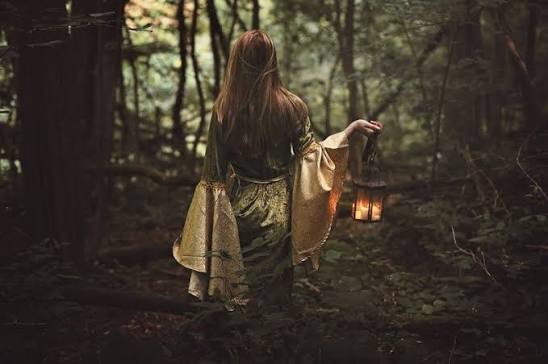
Irish folklore creatures female is a fascinating subject because Irish stories are full of women who are far more than ordinary people. Some appear as beautiful women living near lakes or hidden hills, others bring warnings of death, and a few are powerful figures connected to war, magic, and the world of the dead. Not all of them are friendly, either. In Irish folklore, a woman who offers help beside a river might be a fairy, a spirit, or something you would be better off leaving alone.
What I like about these stories is that female supernatural beings rarely fit into one simple category. A beautiful woman might be dangerous, an old woman might hold enormous magical power, and a spirit associated with death might not be evil at all. Their stories come from different periods of Irish history, including ancient mythology, medieval literature, and local traditions passed down through generations.
If you are looking for Irish folklore creatures female, these twelve figures are a good place to start. Some are well-known names such as the banshee and the Morrígan, while others are connected to particular landscapes, strange encounters, and older beliefs about the supernatural world.
The Banshee: The Woman Who Warns of Death
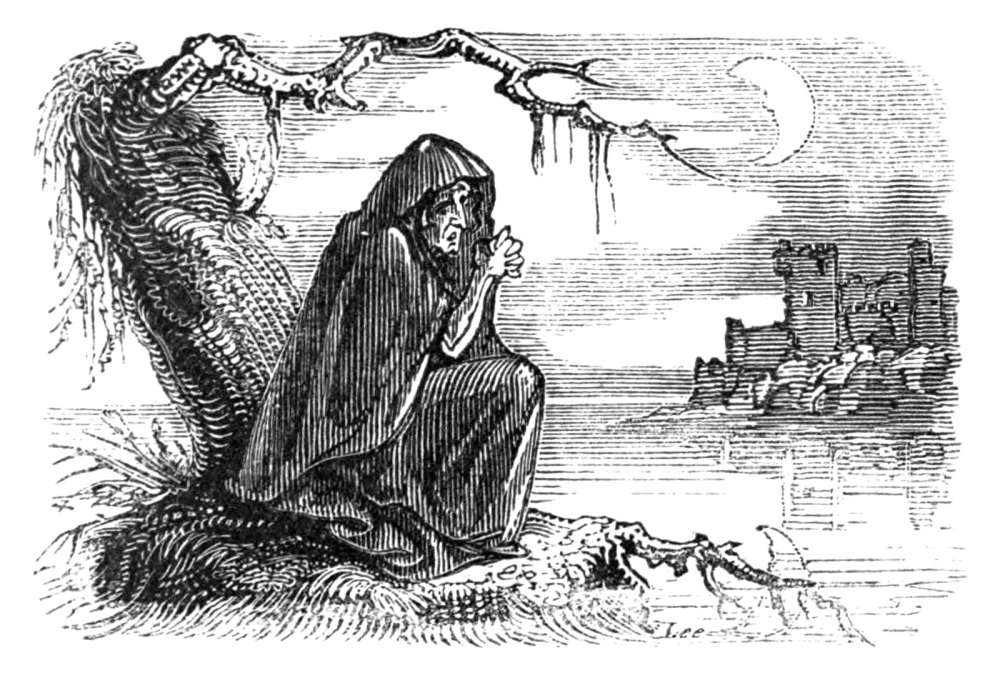
The banshee is probably the first name that comes to mind when people talk about female supernatural beings in Ireland. Her name comes from the Irish bean sí, usually translated as “woman of the fairy mound.” She belongs to the mysterious world of the Aos Sí, the supernatural people associated with ancient mounds and hidden places.
The strange thing about a banshee is that she does not necessarily appear to anyone. Sometimes, people hear her before they ever catch a glimpse of her. Her cry is a long, sorrowful wail, often described as a sound that makes the entire countryside feel suddenly empty.
According to Irish tradition, a banshee’s cry warns that someone in a particular family is about to die. She does not cause the death herself. She announces it, much like a supernatural mourner who knows what is coming before the living do.
Her appearance changes from story to story. She might be a young woman with long silver hair, an old woman with a frightening face, or a pale figure dressed in grey or white. Some accounts describe her combing her hair near a stream. Others portray her as a shadow outside a family home.
Certain old Irish families, particularly families associated with Gaelic ancestry, were traditionally believed to have their own banshees. The O’Neills, O’Briens, and O’Connors are among the names connected with these traditions.
One detail I find especially interesting is the connection between the banshee and keening, the traditional Irish practice of mourning the dead through expressive wailing. The banshee almost seems like a supernatural version of a human mourner, except that she arrives before the tragedy rather than afterward.
The Morrígan: The Shape-Shifting Goddess of War
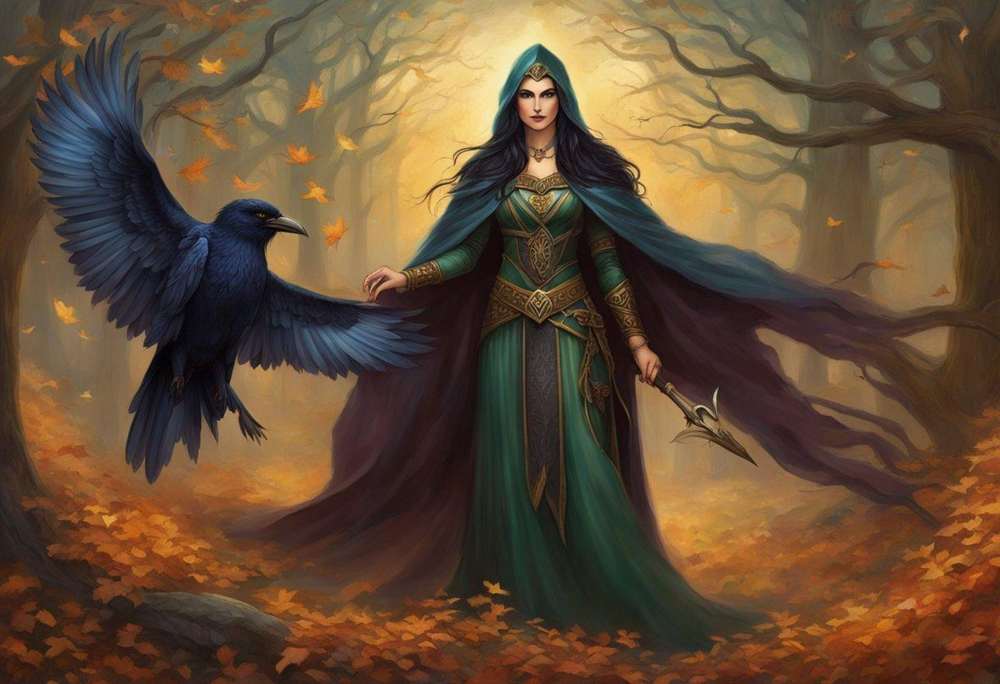
If the banshee represents death arriving at someone’s doorstep, the Morrígan represents death on a much larger scale. She is one of the most powerful female figures in Irish mythology, associated with war, fate, sovereignty, and the fortunes of warriors.
The Morrígan appears in medieval Irish stories, especially those connected with the Ulster Cycle and the hero Cú Chulainn. She is often associated with ravens and crows, birds that circle battlefields and feed on the fallen. In her presence, a battle can feel less like a contest between armies and more like a fate that has already begun unfolding.
She is also a shape-shifter. In different stories, she appears as a woman, a bird, or a frightening figure whose appearance warns warriors about their approaching end.
One famous episode involves Cú Chulainn, who rejects the Morrígan when she approaches him. She later interferes with him in different forms, including those of animals, and their encounters become part of his tragic story.
The Morrígan is sometimes described as a single goddess and sometimes connected with a group of related war goddesses. Her name and identity have been interpreted in different ways, so it is better not to force every tradition into one neat explanation.
What makes her different from many female figures in folklore is that she does not simply haunt the world of humans. She participates in its greatest conflicts. She can challenge heroes, influence battles, and appear at moments when the boundary between victory and disaster becomes very thin.
She is not simply an evil goddess, either. War and death are part of her domain, but so are power, kingship, and the forces that shape a kingdom’s future.
The Cailleach: The Ancient Hag of Winter
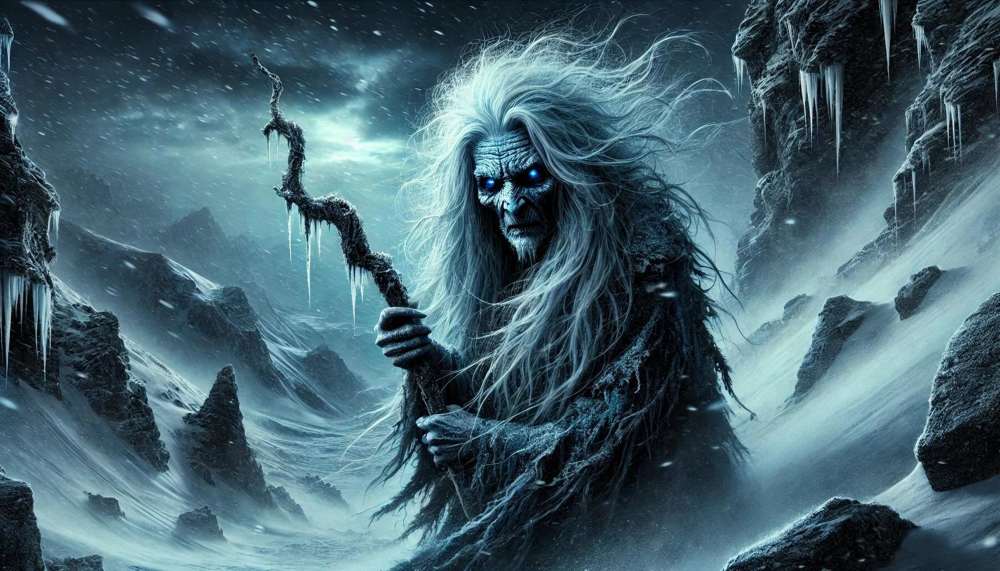
The Cailleach is an ancient female figure associated with winter, wild landscapes, mountains, and the harsh side of nature. Her name is commonly translated as “old woman” or “hag,” but that translation does not quite capture the scale of the character.
This is no ordinary elderly woman living in a cottage. In various Gaelic traditions, the Cailleach is a powerful supernatural figure connected with the formation of landscapes and the arrival of winter. She may appear as an enormous old woman with blue or dark skin, tangled hair, and a frightening presence.
Stories about her vary across Ireland and Scotland. In some traditions, she shapes mountains by dropping stones from her apron. In others, she controls the weather and brings the cold season with her.
The Cailleach is particularly interesting because she represents a different kind of female power from the Morrígan. The Morrígan is associated with battle and political fate, while the Cailleach belongs to the forces of nature that humans cannot easily control.
You can imagine why a figure like this would have been important in a rural society. A long winter could threaten livestock, crops, and entire communities. The Cailleach gives that dangerous season a personality.
She is also connected with the changing seasons. Some traditions describe her power weakening as spring arrives, while other stories give her a more complicated relationship with the land and its cycles.
Not every story about the Cailleach originated specifically in Ireland, since she belongs to a wider Gaelic tradition. Still, she is an important figure when exploring female beings in Irish mythology and folklore.
The Merrow: Ireland’s Female Mermaid
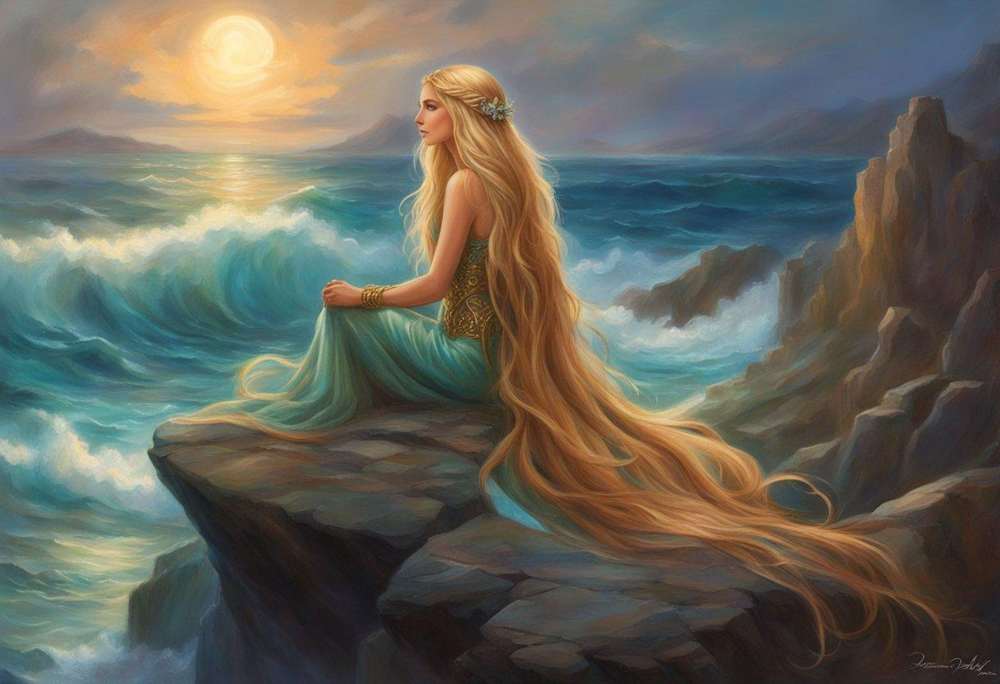
The merrow is Ireland’s traditional mermaid, a supernatural sea being associated with the waters around the Irish coast. The Irish term murúch is associated with this figure, whose stories combine beauty, mystery, and the danger of trying to possess something that belongs to another world.
Female merrows are often described as beautiful women with long green hair and fish tails. Some tales give them magical red caps that allow them to travel between the sea and the land. These caps are sometimes called cohuleen druith in English-language retellings.
One of the best-known stories is “The Lady of Gollerus,” collected by Thomas Crofton Croker in the nineteenth century. In the tale, a fisherman encounters a female merrow on the coast and takes possession of her magical cap. Without it, she cannot easily return to her underwater home.
The fisherman marries her, and they have children together. For a time, she appears to settle into human life. But she never entirely loses her connection to the sea.
Eventually, she discovers her cap, retrieves it, and returns to the water, leaving her human family behind.
It is a sad story, but it is also a revealing one. The merrow is not simply a beautiful creature waiting to be rescued by a fisherman. She has her own home, her own nature, and a life that exists beyond the human world.
Her story also raises a question that appears in many European fairy tales: can someone from another world ever truly belong to ours?
Irish merrow stories include male as well as female beings, but the female merrow is particularly memorable because of the recurring theme of the supernatural woman who is drawn into human life and eventually returns to the place where she belongs.
Macha: The Supernatural Woman Connected to Kingship and Curses
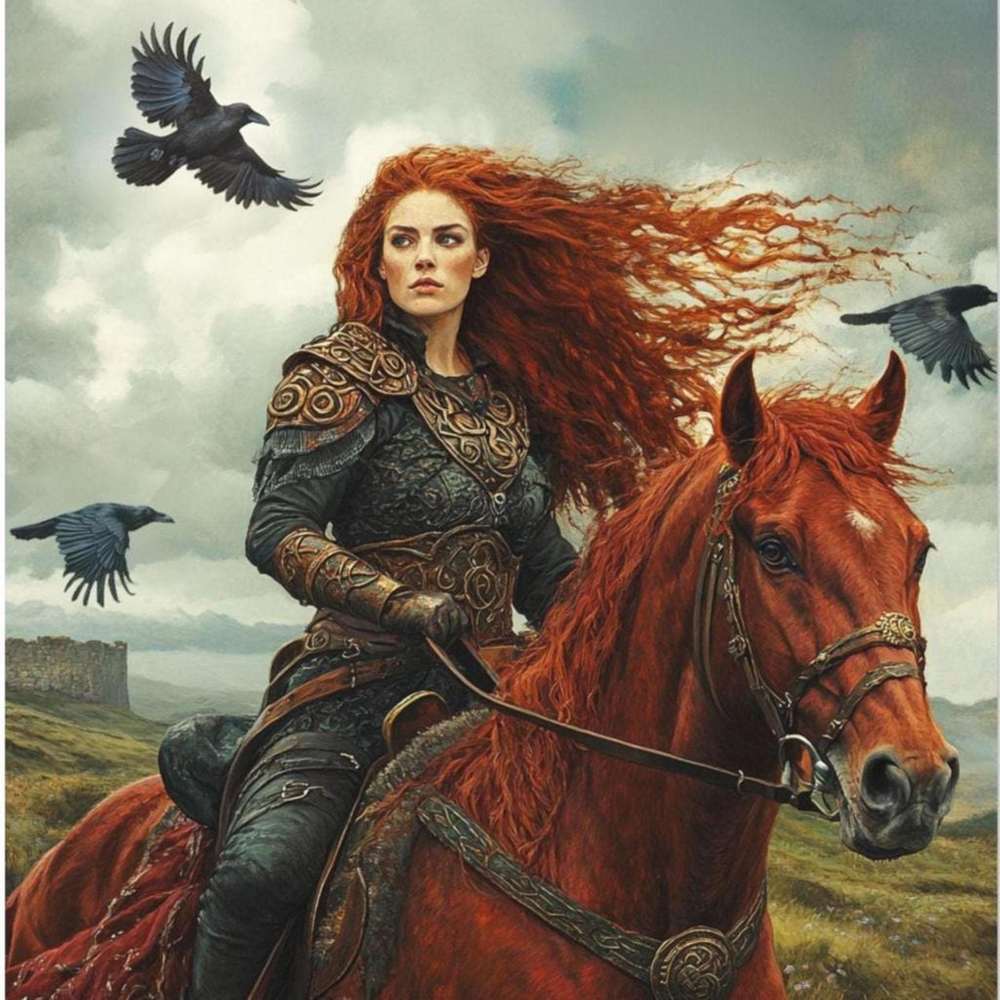
Macha is a name associated with several female figures in Irish mythology. She is connected with sovereignty, war, horses, and the legendary history of Ulster. Because medieval Irish literature preserves different stories about figures bearing her name, it is worth distinguishing the traditions rather than treating them as one perfectly consistent biography.
One famous tale tells of a woman named Macha who marries a wealthy Ulster farmer, Crunniuc. She lives with him quietly until he boasts that his wife can outrun the king’s horses.
The king demands that Macha prove the claim, even though she is heavily pregnant. She is forced to race against the royal horses and wins, but immediately afterward she gives birth to twins.
Enraged by the suffering she has endured, she curses the men of Ulster. According to the story, they will experience the pains and weakness of childbirth when their land faces its greatest danger.
The curse becomes part of the explanation for the difficulties faced by the Ulster warriors in the Táin Bó Cúailnge, one of the major stories of Irish mythology.
It is a strange tale, and it is not meant to be a straightforward account of historical events. Its power lies in the way it connects a woman’s mistreatment with the fate of an entire kingdom.
Macha is not simply a victim, either. Her curse gives her power over the very men who tried to control her. She turns an act of humiliation into a consequence that affects generations.
Other Macha traditions connect the name with sacred places and sovereignty. Taken together, these stories make her one of the most interesting female figures in the mythological history of Ireland.
Aoibheall: The Fairy Woman of Craig Liath
Aoibheall is a female supernatural figure associated with the region of Munster, particularly County Clare. She is sometimes described as a fairy queen and is connected with Craig Liath, a place associated with her in traditional accounts.
Her stories link her with the powerful Dál gCais dynasty, the family from which Brian Boru emerged. In one tradition, Aoibheall appears as a supernatural woman who foretells the fate of warriors and rulers.
She is associated with the Battle of Clontarf in 1014, the famous conflict involving Brian Boru and forces opposing his rule. Accounts of the battle and the traditions surrounding it include supernatural warnings and prophecies.
Aoibheall is particularly interesting because she occupies a space between the fairy world and the political history of Ireland. She is not simply a creature encountered by a random traveler on a country road. Her presence is connected to dynasties, rulers, and the fortunes of important families.
Her story also helps explain why some supernatural women in Irish tradition are associated with particular families or territories. A spirit might serve as a warning, a protector, or a figure whose appearance signals that a major change is approaching.
Aoibheall is sometimes discussed alongside the traditions that contributed to the development of the banshee. Both figures can be associated with foreknowledge of death, although they belong to different strands of Irish storytelling.
Clíodhna: The Fairy Queen of Munster
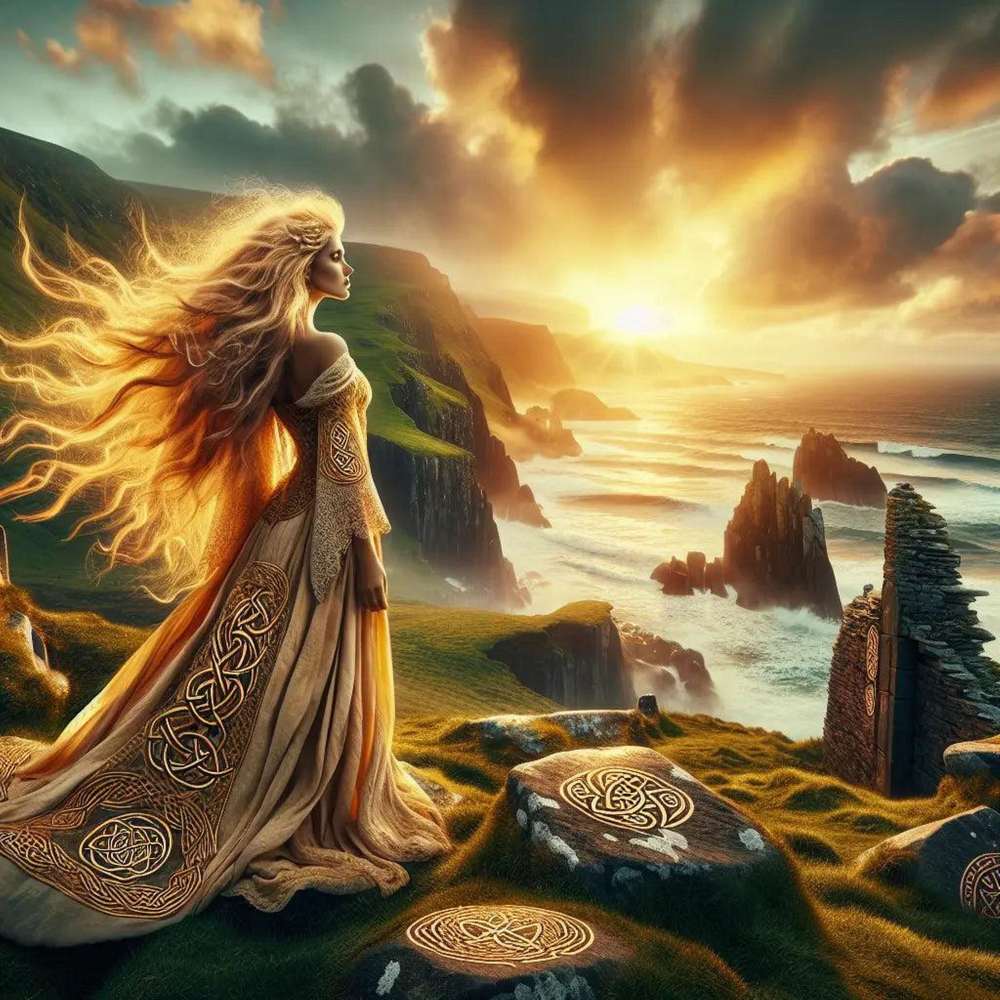
One well-known version of her story tells how Clíodhna travels toward the human world with the intention of joining a man she loves. While she rests near the coast, a supernatural wave takes her away. The place becomes associated with her name and is known as Clíodhna’s Wave.
The details vary between tellings, as they often do in Irish folklore. What remains consistent is the connection between Clíodhna, the sea, and the boundary between the supernatural and human worlds.
Her story has a different mood from that of the banshee. Rather than being defined by a warning of death, Clíodhna is associated with beauty and romantic longing. Yet the sea that carries her story also reminds us that the supernatural world can be difficult to enter and even harder to leave.
She is sometimes called a queen of the fairies, but that title should not be taken to mean that every Irish fairy tradition had one universally recognized ruler. Local stories gave different supernatural figures their own territories and relationships.
Clíodhna is best understood as a powerful regional figure whose legends connect the landscape of southern Ireland with the mysterious world beyond ordinary human life.
Lí Ban: The Woman Who Became a Mermaid
Lí Ban is a remarkable female figure from Irish legend whose story connects a devastating flood with transformation and the sea.
In a medieval Irish tradition, Lí Ban survives a flood that destroys her community. She remains alive beneath the water, and her story becomes associated with a supernatural transformation into a mermaid-like being.
Her tale is connected with the early Irish traditions surrounding Lough Neagh, one of the largest lakes in Ireland. Over time, her story becomes linked with the wider body of Irish mermaid lore.
Unlike the merrow in “The Lady of Gollerus,” Lí Ban is not simply a sea creature who encounters a fisherman. Her identity is tied to survival, transformation, and the strange possibility of continuing to exist after the world she knew has disappeared.
In some versions of the tradition, she eventually encounters a human religious figure and becomes part of a story about conversion and the Christian understanding of the supernatural world.
This is one of the interesting features of Irish mythology: older stories were preserved and retold in a society whose religious beliefs changed over time. Some supernatural characters became connected with Christian saints and moral lessons, while retaining traces of much older mythological ideas.
Lí Ban is especially worth including in a list of female Irish folklore creatures because she shows that Ireland’s mermaid traditions are not limited to beautiful women sitting on rocks beside the Atlantic.
Some of these figures have much stranger beginnings, involving floods, loss, and a life between the human world and the water.
The Washer at the Ford: The Woman Who Washes a Warrior’s Fate
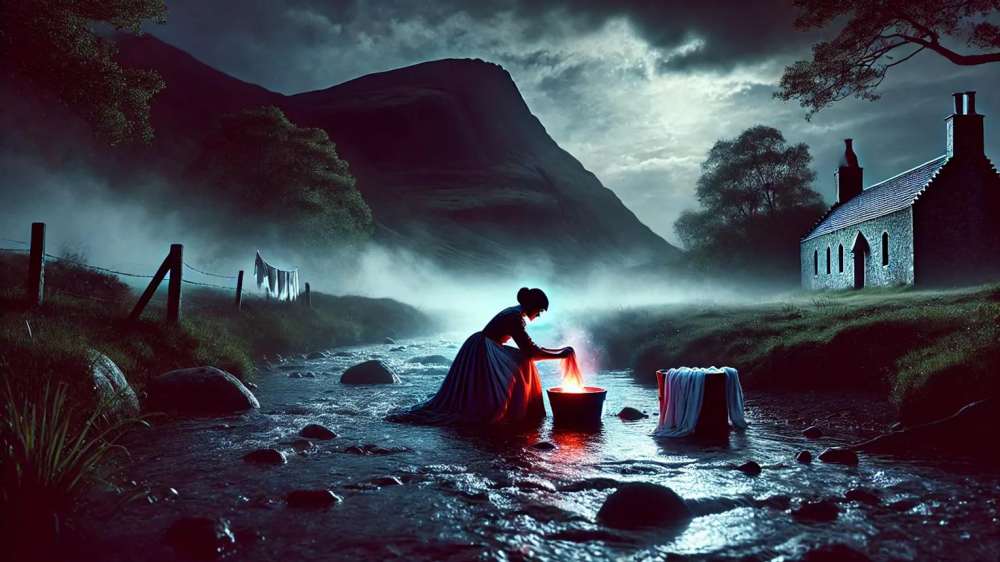
The washer at the ford is one of the most unsettling female figures in medieval Irish storytelling. She appears beside a river or stream, washing bloodstained clothing or equipment connected with someone who is destined to die.
The encounter is particularly frightening when the traveler realizes that the objects being washed belong to him.
A warrior might approach a river before battle and see a woman kneeling in the water. She is washing a piece of clothing, armor, or a weapon. As he gets closer, he recognizes the object. It is his own, and the sight suggests that his fate has already been decided.
The image appears in medieval Irish literature, including stories associated with the hero Cú Chulainn. In these tales, the washer may be connected with the Badb or the wider group of supernatural figures associated with war and death.
This figure is related to the banshee, but the two are not exactly the same. The banshee is chiefly known for her mournful cry, while the washer at the ford reveals the approaching tragedy through a disturbing visual scene.
The Scottish bean nighe is a close relative, but that name and its distinctive traditions belong primarily to Scottish Gaelic folklore. The Irish washer at the ford has its own place in medieval Irish literature.
What makes the washer especially memorable is that she does not need to threaten the warrior. She simply continues her work.
The future is there in the water, and the warrior has to decide what to do with the knowledge that he has just received.
Nemain: The Female Power of Battle Frenzy
Nemain is a female figure associated with battle and the terrifying confusion of war in Irish mythology. Her name is often connected with frenzy or panic, and she appears in traditions related to the supernatural forces that influence warriors.
Like the Badb and the Morrígan, Nemain belongs to a complicated group of female figures whose identities sometimes overlap in medieval Irish texts. She should not necessarily be imagined as a completely separate goddess with a fixed appearance and a single, consistent mythology.
Her role is particularly striking because she is associated not just with physical destruction but with the fear that spreads through an army.
A warrior can be brave, well-trained, and armed with the finest weapons available. But once panic spreads through a group of soldiers, careful plans can collapse. Men may flee, lose their formation, or turn against one another in the confusion.
Nemain represents this frightening side of battle. She is connected with the idea that warfare involves forces beyond the control of individual fighters, including terror, confusion, and the sudden collapse of courage.
She is not as widely recognized today as the Morrígan, but she adds another dimension to the female supernatural figures of Irish mythology.
Together, the Badb, Nemain, and the Morrígan reveal how Irish storytellers could give different aspects of war their own supernatural personalities. One might appear as a crow, another might foretell a warrior’s fate, and another might embody the panic that destroys an army from within.
They are not simply interchangeable names for the same character. Their relationships are complicated, and the surviving texts do not always present them in exactly the same way.
That variation is part of what makes Irish mythology worth exploring in detail.
Final Thoughts
Female beings in Irish folklore are much more varied than the familiar image of the banshee might suggest. Some belong to the fairy world, some are goddesses associated with war and sovereignty, and others are linked with the sea, winter, or the fate of individual families.
The banshee warns of death, the Morrígan confronts warriors with their fate, and the merrow reminds us that a beautiful supernatural visitor may have an entire world of her own. Meanwhile, figures such as Macha and the Cailleach reveal very different kinds of power: one can curse an entire kingdom, while the other is associated with the forces of nature and the changing seasons.
One thing these stories have in common is that their female figures are rarely just decoration. They influence events, challenge powerful men, protect their own worlds, and sometimes decide what happens to people who cross their paths.
If you are exploring Irish folklore creatures female, the most rewarding approach is to look beyond a list of names and examine the stories attached to each figure. Their appearances, powers, and relationships change across different traditions, but they all help explain how Irish communities imagined the mysterious forces surrounding everyday life.
Sources and Further Reading
Smithsonian Folklife: In Search of the Irish Family Banshee
Irish Folklore: The Morrígan and Other Mythological Beings