When you think about horror movie monsters, the usual names come up pretty quickly. Vampires, werewolves, zombies, ghosts, demons. We have seen them in hundreds of movies, in every possible setting. But when you start looking beyond the usual Hollywood creatures, manananggal movies offer something completely different.
But then there is the manananggal.
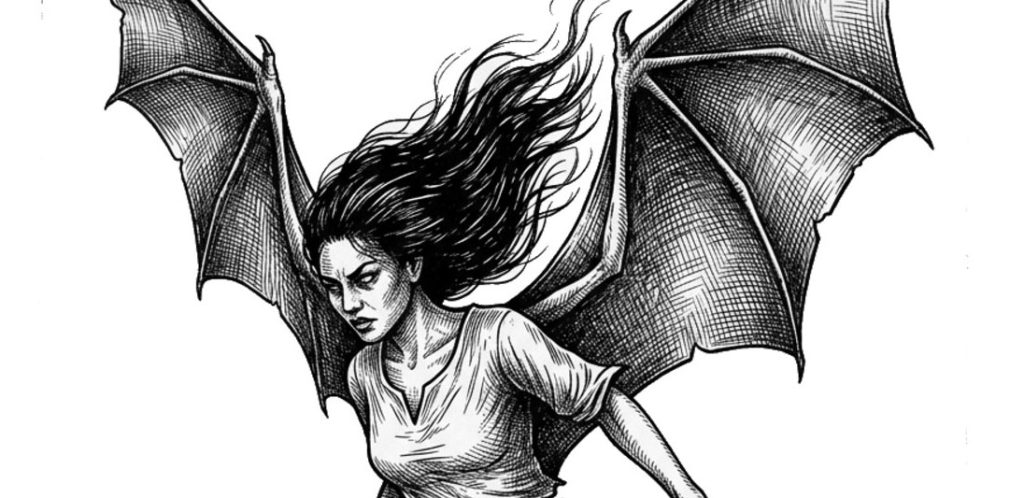
If you have never heard of it before, the idea sounds like something a horror movie writer came up with after a very strange night. The manananggal is a creature from Filipino folklore that is usually described as a woman who looks completely normal during the day. At night, however, she separates the upper half of her body from the lower half and flies through the darkness using bat-like wings.
That is already scary enough.
What makes it even more interesting is that the manananggal has been appearing in Filipino cinema for almost as long as Filipino cinema itself. When you start looking through the history of manananggal movies, you don’t just find a handful of modern horror films. You find a trail that goes all the way back to the silent-film era.
Some movies treat the creature as a straight horror monster. Others mix it with comedy. Some use the manananggal as part of a larger supernatural story. And then there are movies that take the old folklore and turn it into something much more personal, using the creature to explore loneliness, relationships, and what it means to live with a secret.
That’s what makes the history of manananggal movies so interesting.
If you’re looking for a Manananggal Movies list, there are many films featuring this strange creature than you might expect.
What Exactly Is a Manananggal?
Before getting into the movies, it helps to understand what the creature actually is.
The manananggal is a supernatural being from Filipino folklore, usually described as female. During the day, she can appear completely human. When night comes, she separates her upper body from her lower body and flies away, searching for victims.
That strange ability is what makes the creature so memorable.
It isn’t simply a woman who turns into a monster.
Her body actually comes apart.
Older Filipino folklore contains several related stories and figures. A 1589 account by Spanish priest Juan de Plasencia described a creature called the “magtatangal,” which was said to separate part of its body and travel at night. Later folklore developed into the manananggal stories that are better known today.
Cinema took that old idea and gave it a face.
And once filmmakers figured out how visually disturbing the creature could be, it was only a matter of time before the manananggal became a regular part of Filipino horror.
Manananggal Movies Go All the Way Back to 1927
One of the strangest things about the history of manananggal movies is just how far back it goes.
In 1927, Filipino filmmaker José Nepomuceno directed Manananggal, a silent horror movie that is generally regarded as one of the earliest known Filipino horror films centered on the creature.
Mary Walter played the lead role.
The movie is especially interesting today because it came from a completely different era of filmmaking. There were no modern CGI effects, no sophisticated sound design, and none of the visual tricks modern horror directors can use.
And yet the basic idea was already there.
A woman who could separate her body and fly into the night.
Unfortunately, the film has not survived in complete form, so there isn’t much left for modern audiences to actually watch. Most of what we know about it comes from historical records.
Still, the fact that a manananggal movie existed as early as 1927 says something about how deeply the creature was already connected to Filipino popular culture.
The monster wasn’t imported from Hollywood.
It came from local folklore.
Manananggal vs. Mangkukulam
By the 1960s, the manananggal had started showing up in movies that weren’t necessarily interested in taking the creature completely seriously.
One example is Manananggal vs. Mangkukulam, a 1960 horror-comedy directed by Consuelo Osorio.
The film featured actors including Pugo, Lopito, Patsy, Chichay, and Aruray.
The important thing about this movie is the mixture of horror and comedy.
The manananggal wasn’t simply being presented as an unstoppable nightmare anymore. Filipino filmmakers were beginning to play around with the character.
That makes sense when you think about how folklore creatures usually evolve in popular culture.
At first, people are frightened by them.
Then everyone becomes familiar with the stories.
Eventually, someone starts making jokes about them.
The same thing happened with the manananggal.
Instead of being locked into one particular type of horror story, the creature became flexible enough to fit into comedy, fantasy, adventure, and even romance.
Lipad, Darna, Lipad!
In 1973, the manananggal appeared in a very different kind of movie.
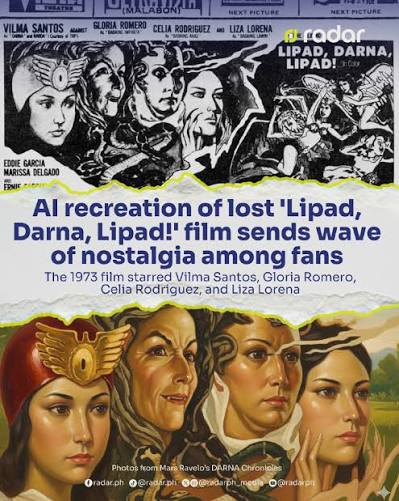
Lipad, Darna, Lipad!, directed by Maning Borlaza, brought the creature into the world of Darna, one of the most famous characters in Filipino popular culture.
Gloria Romero played Miss Luna, a respected teacher who has a secret.
She is actually a manananggal.
Vilma Santos also appears in the movie.
This is an interesting use of the creature because one of the most important aspects of manananggal folklore is the idea that the monster can hide in plain sight.
During the day, she looks like an ordinary person.
Nobody suspects anything.
Then night comes.
That makes the manananggal naturally useful for stories involving secret identities.
A character can spend the entire day acting completely normal while the audience knows there is something very wrong underneath the surface.
It is basically the perfect setup for a supernatural double life.
Pagsapit ng Dilim
Another interesting example from the 1970s is Pagsapit ng Dilim, released in 1975.
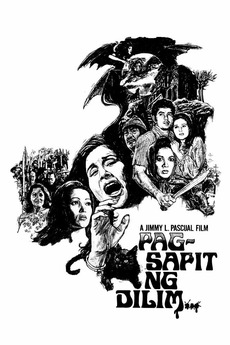
The movie uses the manananggal in a story involving family and transformation.
Perla Bautista plays a mother who tricks her daughter, played by Gina Pareño, into becoming a manananggal.
That changes the nature of the threat.
The monster isn’t simply something that comes from outside.
It is passed down.
It becomes part of the family.
That idea makes the folklore more disturbing because the danger is no longer something you can simply run away from.
What if the thing you’re afraid of is something your own family taught you?
What if becoming a monster isn’t something that happens to you by accident, but something that is deliberately passed from one generation to another?
Those themes would continue to appear in different forms in later Filipino supernatural movies.
For anyone making a Manananggal Movies list, this segment is one of the titles that deserves a place on it.
The Manananggal in Shake, Rattle & Roll
If you’ve spent any time looking into Filipino horror cinema, you’ve probably come across the Shake, Rattle & Roll series.
The first movie was released in 1984 and consisted of three separate horror stories. One of those segments was simply called “Manananggal.”
The segment was directed by Peque Gallaga and featured Herbert Bautista among its cast.
The story follows a young character living in a remote area where a manananggal is believed to be lurking.
His grandmother eventually tells him that he has to deal with the creature.
The story then becomes a classic battle between a human character and a supernatural monster.
There is also a strong emphasis on the folklore surrounding the creature and how it can be defeated.
This particular segment is important because it helped introduce the manananggal to a wider audience through one of the country’s best-known horror anthology franchises.
The Shake, Rattle & Roll movies would go on to feature many different Filipino monsters and supernatural creatures over the years.
But the manananggal remained one of the most recognizable.
Manananggal in Manila
Then we get to 1997.
And the title tells you almost everything you need to know.
Manananggal in Manila takes the traditional creature and puts it in the middle of the modern city.
The movie was directed by Mario O’Hara and starred Tonton Gutierrez, Alma Concepcion, and Aiza Seguerra.
The story centers on Terry, a pregnant woman, and the strange events surrounding her.
The movie uses the manananggal in a much more urban environment than many of the older stories.
And that changes the feeling of the horror.
A monster hiding in an isolated village is one thing.
A monster hiding in a city is another.
In a village, you might know your neighbors.
In a city, you don’t.
You can walk past hundreds of strangers every day without knowing anything about them.
Your neighbor could be a perfectly ordinary person.
Or maybe she isn’t.
That’s where the urban setting becomes useful.
The old folklore suddenly feels closer.
The creature doesn’t have to live in some distant forest.
It could be living in the apartment building next door.
Ang Manananggal sa Unit 23B
Then, almost twenty years later, the manananggal got one of its most unusual movie treatments.
The 2016 film Ang Manananggal sa Unit 23B was directed by Prime Cruz and starred Ryza Cenon and Martin del Rosario.
The movie premiered at the QCinema International Film Festival before receiving a wider release in 2017.
And this time, the manananggal isn’t simply the monster everyone is trying to kill.
She’s the main character.
Ryza Cenon plays Jewel, a lonely woman who lives by herself and keeps people at a distance.

Then she meets Nico.
The two begin developing a relationship.
There is just one problem.
Jewel is a manananggal.
That completely changes the usual formula.
The question isn’t simply whether the humans will survive the monster.
Instead, the story starts asking something much more personal.
Can someone love a person who is also a monster?
What happens when the person you are becoming attached to is hiding something terrible?
And what happens when the monster doesn’t necessarily want to be a monster?
This is one of the things that makes Ang Manananggal sa Unit 23B stand out among modern manananggal movies.
The creature isn’t treated as a simple villain.
She’s a character.
She has feelings.
She is lonely.
She wants a normal life.
But she also can’t escape what she is.
That gives the old folklore a completely different direction.
Why Does the Manananggal Work So Well in Horror Movies?
There are several reasons the creature works so well on screen.
The first is the visual.
A woman separating the upper half of her body and flying through the night is an image that is almost impossible to forget.
The second is the secrecy.
The manananggal can look human during the day.
That creates the classic horror question:
What if the monster is already around you?
You don’t know who it is.
It doesn’t need to announce itself.
It can shop at the same store.
Walk down the same street.
Live in the same apartment building.
That makes the creature more unsettling than a monster that simply appears out of nowhere.
There is also the transformation itself.
Werewolves change shape.
Vampires have their own transformations.
But the manananggal does something much more physical.
Her body separates.
The image is disturbing because it takes something completely familiar — the human body — and turns it into something impossible.
How Manananggal Movies Have Changed
One of the most interesting things about looking at these movies together is seeing how much the character has changed.
In the 1927 silent film, the manananggal was primarily a supernatural horror figure.
In the 1960s, the creature could also be used for comedy.
In the 1970s, it appeared in stories involving secret identities, families, and transformations.
In 1984, it became part of the classic Filipino horror anthology format.
In 1997, the creature moved into modern Manila.
And in 2016, she became the central character of a story about loneliness and romance.
The creature itself didn’t necessarily change.
The stories around it did.
That’s one of the reasons folklore monsters survive for so long.
You don’t have to tell the same story every time.
You can take the basic creature and put it into whatever kind of story you want.
Which Manananggal Movies Should You Look For?
If you’re interested in the history of Filipino horror, the 1927 Manananggal is probably the most fascinating from a historical perspective, although the fact that the movie is largely lost makes it more of a piece of film history than something you can simply sit down and watch from beginning to end.
For classic Filipino horror, the Manananggal segment of Shake, Rattle & Roll is worth knowing about.
If you’re interested in seeing the creature placed into a more urban setting, Manananggal in Manila is another obvious title to look for.
And if you want something that takes the folklore in a completely different direction, Ang Manananggal sa Unit 23B is probably the most unusual example of the group.
Instead of asking how ordinary people can defeat the creature, it asks what happens when the creature is the person we are supposed to understand.
That is a pretty big change from the old folklore.
Why Manananggal Movies Are Still Interesting
The best thing about looking into manananggal movies is that you don’t get one single type of horror.
You get a history.
You can start with a nearly century-old silent movie.
Then move through the horror-comedy films of the 1960s.
Then into the supernatural stories of the 1970s.
Then the horror anthology era.
Then the urban horror of the 1990s.
And finally the more personal, character-driven approach of modern Filipino cinema.
The basic idea remains surprisingly simple.
During the day, she looks human.
At night, she becomes something else.
And you don’t necessarily know which one you’re looking at.
That’s probably the most unsettling part of the manananggal legend.
The monster doesn’t have to live in some abandoned castle or distant forest.
She can live among ordinary people.
She can smile at you.
Talk to you.
Walk past you during the day.
And then, after midnight, she can separate herself from her own body and disappear into the darkness.
That idea has been around for generations, and Filipino filmmakers have kept finding new ways to use it.
Maybe that’s why the manananggal continues to show up in movies.
The creature may be old, but the fear behind it isn’t.
Sometimes the scariest monster isn’t the one hiding in the darkness.
It’s the one you already saw in daylight.