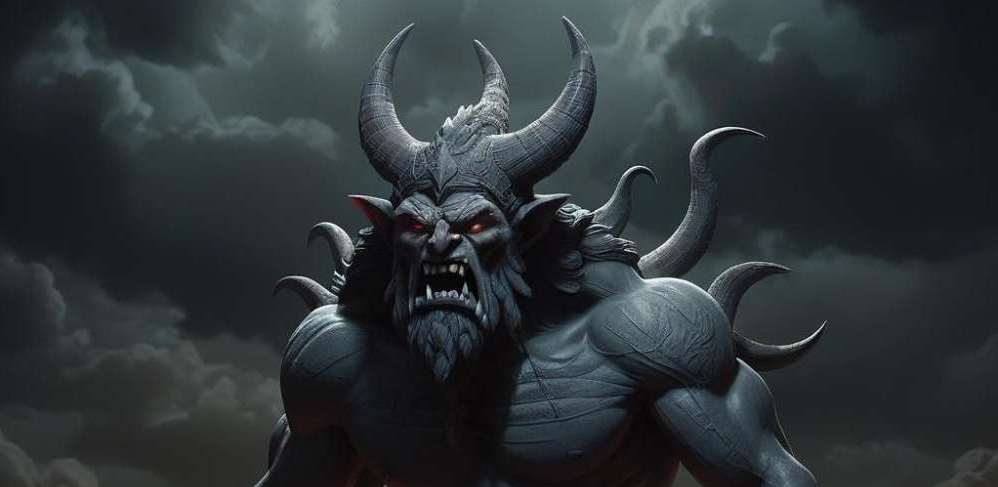
When exploring a Sumerian Demons List, names like Pazuzu and Utukku usually come up first. But the supernatural world of ancient Mesopotamia was much bigger than that. Long before modern horror movies gave us possessed dolls, haunted houses, and monsters hiding in the dark, people in Sumer and neighboring civilizations already had stories about dangerous spirits, restless ghosts, disease-bringing beings, and creatures that could make ordinary life terrifying.
The Sumerians lived in southern Mesopotamia, in what is now Iraq. Their civilization developed thousands of years ago, and their religious beliefs influenced later Mesopotamian cultures, including the Akkadians and Babylonians.
One important thing to understand before looking at this Sumerian demons list is that ancient Mesopotamians did not always divide supernatural beings into strictly good and evil categories. Some spirits were dangerous, while others could protect people or serve the gods. A creature that brought harm in one situation might even be used against another supernatural threat.
Also, not every demon commonly associated with Mesopotamia originated in Sumerian religion. Some became prominent in later Babylonian traditions. The names below include Sumerian beings and figures from the wider Mesopotamian world, with those differences noted where they matter.
Utukku
The Utukku were a class of supernatural beings mentioned in Mesopotamian religious and magical texts. Their nature depended on the context. Some were associated with protection, while others were considered dangerous spirits.
The Sumerian expression utukku ḫulu, often translated as an evil Utukku, appears in incantations intended to drive away harmful supernatural forces. Akkadian texts used the related term utukku lemnu.
What makes the Utukku interesting is that the name does not describe just one individual monster. It belongs to a broader category of spirits. Ancient Mesopotamian exorcists sometimes called upon divine powers to force these entities away from a person or place.
Think of the Utukku as one part of a much larger supernatural system rather than a single demon with a fixed appearance.
Alû
Alû was another supernatural being named in Mesopotamian incantations. An evil Alû appears in lists of dangerous spirits that people believed could threaten their well-being.
Descriptions of Alû vary across the surviving traditions, so it is difficult to give it one definitive appearance. Some later descriptions and interpretations associate it with a threatening presence that could attack or trouble a sleeping person.
The important distinction is that the Alû was not simply a modern-style monster with a universally agreed design. Ancient texts were often more concerned with what a spirit could do than with providing a detailed physical description.
That uncertainty actually makes Alû a useful figure for horror. A dangerous presence does not need a clearly defined face to be frightening.
Gidim (Edimmu)
The Sumerian word gidim refers to a ghost or spirit of the dead. In Akkadian, the related term is etemmu, often written as Edimmu in modern discussions of Mesopotamian mythology.
Death did not necessarily mean that a person’s supernatural existence had simply disappeared. The dead were understood to have a continued existence in the underworld, and proper burial practices and offerings mattered within this religious worldview.
A restless or troublesome ghost could become a source of fear for the living. Mesopotamian incantations included ways of dealing with harmful spirits of the dead, particularly when misfortune or illness was attributed to supernatural causes.
Not every Gidim was automatically an evil demon. The idea of the dead themselves was more complicated than that. Nevertheless, the possibility of a dangerous spirit returning to trouble the living was an important part of Mesopotamian supernatural belief.
For anyone interested in ancient ghost stories, Gidim is one of the most relevant names on this list.
Gallû
Gallû, also known through the Akkadian form gallû, was a frightening class of demon associated with the underworld and the pursuit or capture of victims.
Gallû demons appear in Mesopotamian literary and religious traditions, including stories involving the gods and the realm of the dead. In the famous myth of Inanna’s descent into the underworld, underworld agents play an important role in the events that follow her return.
The Gallû is often described in modern summaries as an underworld demon or a spirit that seizes its victims. The precise details depend on the text being discussed.
Unlike a ghost that returns because it has unfinished business, the Gallû belongs to a more threatening supernatural order. It represents the possibility that the underworld has agents capable of reaching beyond its own borders.
Lilû
Lilû is a male supernatural figure associated with the wider Mesopotamian traditions of night spirits and beings connected with sexual or reproductive dangers.
Its name belongs to the same general family of terms as Lilītu and Ardat-Lilî. These beings are often grouped together in modern discussions, although their individual roles and descriptions are not identical.
The exact characteristics of Lilû can be difficult to establish because the surviving evidence comes from different periods and types of text. Later interpretations sometimes make these figures sound much more uniform than they actually were.
Lilû is worth knowing because it illustrates how ancient Mesopotamian people organized supernatural threats into recognizable categories. Some spirits were associated with illness, others with death, and others with particular dangers involving human relationships and reproduction.
Lilītu
Lilītu is a female supernatural figure associated with the same broad family of Mesopotamian night spirits as Lilû.
The name is frequently connected to discussions of female spirits, sexuality, and supernatural dangers. However, the exact meaning and role of Lilītu changed across texts and historical periods.
It is especially important not to treat Lilītu as automatically identical to the later Jewish figure Lilith. The names and traditions have historical connections that scholars have investigated, but they developed in different cultural and religious settings.
Modern horror often turns Lilītu into a clearly defined succubus or demoness. Ancient sources are less straightforward. They offer evidence for a category of supernatural being, but not always the detailed biography that modern readers might expect.
Still, Lilītu is a useful name for anyone exploring the origins and development of demon traditions across the ancient Near East.
Ardat-Lilî
Ardat-Lilî is another figure associated with the Mesopotamian family of night spirits.
The name is often interpreted in connection with a female or maiden spirit, and ancient sources associate this figure with dangers involving sexuality and reproduction. As with Lilû and Lilītu, the available descriptions do not support every detail that appears in modern demon lists.
Ardat-Lilî is particularly interesting because these supernatural beings were not necessarily understood as independent monsters with elaborate origin stories. Their identities could be defined by the kind of threat they represented and the rituals used to counter them.
When researching this figure, it is worth checking whether a source is discussing the ancient Mesopotamian being or a later interpretation influenced by modern occult literature.
Namtar
Namtar was a supernatural figure closely associated with death and fate in Mesopotamian mythology. In Akkadian, the related name appears as Namtaru.
Namtar is connected with the underworld and serves as an important figure in traditions involving Ereshkigal, the queen of the underworld. He is also associated with death-bringing forces and harmful afflictions.
One well-known appearance comes from the Mesopotamian story of Nergal and Ereshkigal, in which Namtar serves the queen of the underworld.
Namtar is sometimes casually described as a demon of death, but the distinction between a demon, a divine servant, and a supernatural official was not always the same as it is in modern fantasy. His role depends on the myth or ritual text in which he appears.
What makes Namtar compelling is his connection to something humans could neither fully understand nor escape: the arrival of death.
Pazuzu
Pazuzu is probably the most recognizable name on this list, especially among modern horror fans.
He was a powerful demonic figure associated with destructive winds, particularly dangerous winds that could bring illness and hardship. His appearance is unmistakable in surviving ancient artwork: he has a fierce face, wings, claws, and a combination of human and animal features.
Pazuzu became prominent in first-millennium BCE Mesopotamian traditions. Although he belongs to the wider Mesopotamian supernatural world, calling him an exclusively Sumerian demon would be misleading.
Here is the strange part: Pazuzu could also serve a protective function. His image was used in amulets intended to ward off other supernatural threats, especially Lamaštu.
That might sound contradictory, but ancient Mesopotamian supernatural beliefs did not always divide beings into the neat categories of good and evil familiar from modern religious fiction. A dangerous power could sometimes be used to repel another danger.
Pazuzu’s later fame owes a lot to The Exorcist, the 1973 horror film that brought his name to a much wider audience. The ancient figure, however, existed long before Hollywood discovered him.
Maškim (Rābiṣu)
Maškim is a Sumerian term associated with an overseer or an agent, and it appears in supernatural contexts as well. The related Akkadian term rābiṣu can refer to a watcher or one who lies in wait.
In Mesopotamian incantation traditions, an evil Maškim appears among the supernatural beings people sought to drive away.
The idea of a threatening presence waiting somewhere out of sight is easy to recognize in horror stories today. But we should be careful not to turn a translated term into a fully developed monster when the ancient texts do not provide enough information.
Maškim is best understood as part of the larger collection of supernatural threats named in Mesopotamian ritual literature, rather than as a creature with one universally accepted appearance.
Were all Sumerian demons evil?
Not exactly. This is one of the most important things to remember when exploring ancient Mesopotamian demonology.
The word demon can be misleading because modern readers often imagine a supernatural being that is always evil and exists in opposition to the divine. Mesopotamian beliefs were more complicated.
Some beings were considered harmful. Others could protect people, serve the gods, or occupy different roles depending on the circumstances. Protective rituals, amulets, and incantations were important ways of dealing with supernatural dangers.
There is also a historical problem with the label Sumerian. Sumerian religious traditions developed over a long period and interacted with Akkadian and Babylonian beliefs. A name found in a later Babylonian text should not automatically be treated as evidence for an identical belief in the earliest Sumerian period.
That is why it helps to distinguish between Sumerian literary figures such as Asag and broader Mesopotamian demons such as Lamaštu and Pazuzu.
Final Thoughts
Ancient Mesopotamia offers a huge collection of supernatural figures, from dangerous spirits and restless ghosts to powerful beings associated with death, disease, wind, and the underworld.
Asag stands out for its connection to Sumerian myth and the struggle against chaos. Gidim reflects fears surrounding the dead. Lamaštu shows how supernatural beliefs became connected to the dangers of childbirth, while Pazuzu demonstrates that a frightening demon could also be used for protection.
The surviving texts do not always give us a complete picture. Some names describe broad categories of spirits, and others changed meaning across centuries. That makes researching them a little more complicated, but it also makes the subject much more interesting.
If you want to explore ancient horror beyond Greek and Egyptian mythology, Mesopotamian demonology is a great place to start. Many of its most unsettling figures existed in stories and rituals thousands of years before the modern horror genre appeared.
Sources
Demons and Exorcism in Ancient Mesopotamia — Religion Compass
Mesopotamian Deities — The Metropolitan Museum of Art
Pendant with the Head of Pazuzu — The Metropolitan Museum of Art
Demons and Genii in Mesopotamia — French Ministry of Culture