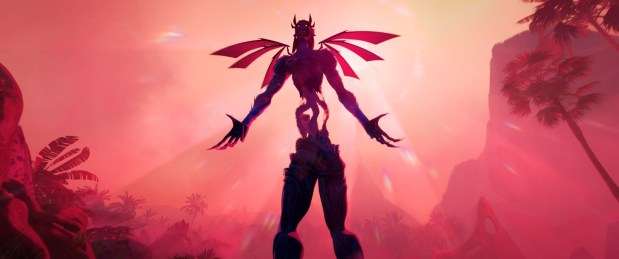
Today, we’re talking about the animated film Forgotten Island and how it brings The Dreaded Manananggal, one of the scariest creatures in Filipino folklore, to life. We’ll look at the movie’s story, meet Manang, the terrifying creature at the center of it all, and explore how the filmmakers turned this legendary monster into a character who’s both frightening and surprisingly tragic.
What Is the Movie About?
Forgotten Island takes place in the Philippines during the 1990s. The story follows two childhood friends, Jo and Raissa. Raissa’s family is preparing to send her to the United States to study at Caltech, and Jo makes her promise that they’ll stay friends no matter what. A classic childhood promise, right? But that promise ends up playing a much bigger role in the story than you’d expect.
On the night of their farewell, a mysterious portal opens, and the two find themselves on an island called Nakali. This isn’t your average island. It’s filled with creatures straight out of Filipino mythology, local legends, and the stories families pass down from one generation to the next. Some are cute, some are strange, and others make you wonder why anyone would want to be there in the first place.
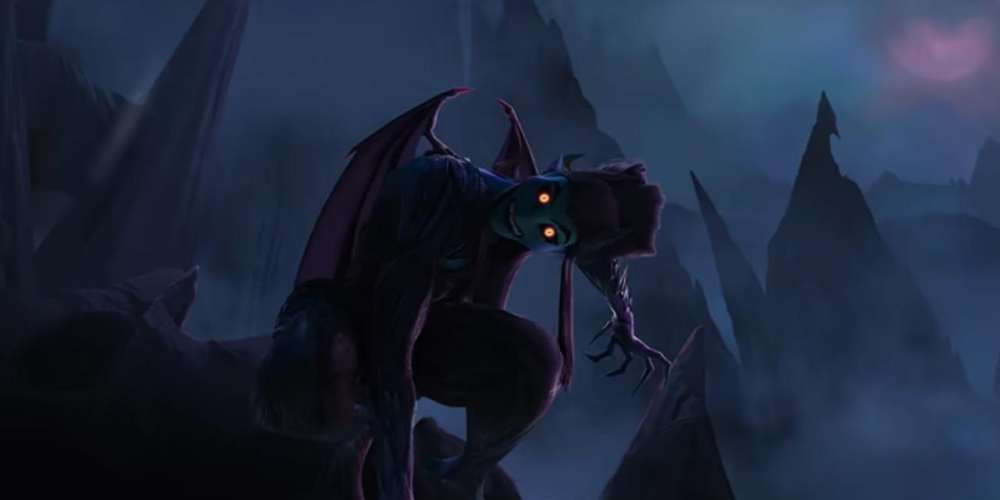
As Jo and Raissa search for a way home, they’re joined by Raww, a clumsy but well-meaning wolf-dog. Then the island’s most feared resident makes her entrance: Manang, the creature known in the film as the Dreaded Manananggal.
Manang: More Than Just a Monster
At first glance, Manang looks like a pretty straightforward monster. She’s got wings, she flies around, and everyone is terrified of her. But the film doesn’t leave her at that. She’s not just some big, scary villain. She has a past, and it’s a pretty dark one.
We’re told that Manang was once a cruel ruler. Then her wings were stolen, making her even angrier than before. But that’s not the whole story. As things unfold, we learn that her memories have also been stolen by a memory thief named Batiba. In other words, part of the reason she’s so angry is that she can’t even remember who she used to be.
This is where things get particularly interesting. Director Januel Mercado has explained that the character is meant to serve as a metaphor for dementia. According to Lea Salonga, Mercado described Manang’s story as being about “trying to hold on to something that’s slipping away.”
So Manang isn’t simply an angry monster. She’s a being who’s lost her memories and can no longer remember who she is or what turned her into the creature she has become. That’s some pretty heavy backstory for a family animated film, but in a good way.
There’s another important rule in the film, too: if you want to leave Nakali, you have to give up your shared memories. That means Jo and Raissa risk forgetting each other if they want to get home. And since Manang is a creature who feeds on memories, she becomes almost a living embodiment of that fear.
At one point, Raww warns them, “She’s a demon who feeds on memories. You could forget everything. Even each other.”
The film isn’t just using the manananggal as a source of horror. It puts her right at the center of its themes of friendship, memory, and the fear of losing someone you love.
Eventually, Raissa steals Manang’s wings. Naturally, Manang goes after her. At this point, the story shifts from “the heroes must fight a monster” to “the heroes have accidentally messed with a terrifying creature, and now she’s really, really angry.” Her pursuit of the two becomes personal, which makes the whole situation even more entertaining.
So, What Exactly Is a Manananggal?
In Filipino folklore, the name manananggal comes from the Tagalog root tanggal, which means something like “to remove” or “to separate.” The creature is usually described as a woman whose upper body detaches from her lower half. She grows bat-like wings and takes to the night sky, leaving her lower body behind on the ground.
Even as a concept, that’s pretty unsettling.
Manananggals are said to hunt at night. In traditional stories, they prey on sleeping people, pregnant women, and those left alone. They have a long, hollow, tube-like tongue that’s used to suck blood or feed on internal organs. There’s also a weakness that makes these creatures particularly interesting: if a manananggal can’t return to her lower body before sunrise, she’s doomed.
That’s the rule, and it’s a pretty grim one.
But the manananggal isn’t just a scary creature from a horror story. These legends can also be connected to deeper fears surrounding women, aging, shame, loneliness, and social exclusion. The creature is frightening, sure, but there’s often something tragic about her, too. That’s part of what makes her so fascinating.
Forgotten Island doesn’t completely ignore this darker side of the legend. Instead, it suggests that what turned Manang into a monster wasn’t simply evil, but also the loss of something essential to her identity: her memories.
That makes her a much more interesting character than a one-dimensional villain. Of course, the film isn’t a perfect documentary about Filipino mythology. It’s a DreamWorks animated movie made for children and families, after all. But it does something important: it brings a Filipino creature onto the global stage and gives her a story worth telling.
Lea Salonga as a Villain Is a Big Deal
Manang is voiced by Lea Salonga. Yes, the same Lea Salonga who voiced Jasmine in Aladdin and Mulan in Mulan. She’s also a Tony Award-winning performer.
For years, she’s been associated with heroes, princesses, and other good characters. But in this film, she’s voicing a villain for the first time in her career.
According to director Januel Mercado, “Salonga is not the hero in our film.”
Salonga herself was interested in making that change. She explained that as she approached her 50s, she started thinking, “Okay, it’s time to move away from Disney princesses.” She also said she wanted Manang to be as far removed from her real-life personality as possible.
Honestly, that detail alone could be a selling point for the movie.
The rest of the cast seems pretty impressed with her performance, too. H.E.R. praised her work, saying, “She did an amazing job. Would we expect anything less? No.”
Liza Soberano also described the manananggal as the perfect Filipino creature for the film, pointing out that she’d never heard of anything quite like it elsewhere in the world.
Some of the cast members have even said they’d love to see a Manang spin-off. And honestly, I’d watch that. A tragic, furious, flying half-woman whose memories have been stolen? There’s plenty of good material to work with there.
Behind the Film: A Love Letter to Filipino Culture
Forgotten Island isn’t just another fantasy movie. It’s clear that the people behind it care about Filipino culture and wanted to bring it to the screen in a meaningful way.
Director Joel Crawford has described the film as a “love letter to Filipino culture.” His wife is Filipino, and after working with Januel Mercado on Puss in Boots: The Last Wish, Crawford teamed up with him again for this project.
Setting the story in the Philippines during the 1990s also gives the film a nostalgic feel. According to Crawford, the 1990s were a time when friendships could feel more fragile because staying in touch wasn’t as easy as it is today. As he put it, “There was no FaceTime. Moving away felt permanent.”
That idea fits perfectly with the film’s central theme. When Jo and Raissa face the possibility of being separated, it’s not just about moving to another country. It’s about losing the shared experiences that made their friendship what it is.
The filmmakers also worked with Manila-based Snipple Animation on the film’s 2D animation. Crawford mentioned that the team drew inspiration from the same kinds of things that influenced Dragon Ball Z and really pushed the boundaries of what they could do.
That means Filipino artists weren’t simply brought in to offer advice or provide cultural details. They played a real part in shaping how the film looks and feels.
The voice cast is also packed with Filipino and Filipino-American talent, including H.E.R., Liza Soberano, Dolly de Leon, Jo Koy, Manny Jacinto, Amielynn Abellera, and, of course, Lea Salonga.
And that matters. Representation isn’t just about putting a country’s flag somewhere in the background. It’s about giving people from that culture a genuine role in telling the story.
Why Does Manang Work So Well?
I think the Dreaded Manananggal works so well in Forgotten Island because she’s more than just a scary face.
She’s terrifying, of course. She flies, she has wings, and the whole idea of her upper body separating from the rest is creepy enough on its own. But she’s also sad. She’s been wronged. She’s lost her memories. She’s become a monster, yet the film still remembers that there was someone underneath all that anger.
That’s what good folklore does. It takes a fear and gives it a face.
The manananggal was never just about blood and terror. The creature can also represent losing control, losing yourself, and being pushed to a breaking point. The film seems to understand that. It doesn’t just use Manang for a few jump scares and move on. It gives her a story of her own.
The film’s reviews suggest that its approach has struck a chord with audiences, too. Forgotten Island currently has a 94% critics’ score and a 95% audience score on Rotten Tomatoes. Some critics have even called it one of the studio’s best films.
A reviewer at The AU Review praised Manang’s design, suggesting that it could leave younger viewers wondering what might be hiding in the dark for at least a few nights. The review also highlighted Salonga’s performance, saying she brings exactly the kind of theatrical menace you’d hope for.
Meanwhile, the review on RogerEbert.com describes the manananggal as a bat-winged, demonic creature with a terrifying silhouette that could stick in people’s minds for generations.
Lea Salonga voicing a manananggal might sound like an odd choice at first. You might even think, “Really? Her?” But then you watch the film, and it starts to make sense. By the end, you’re thinking, “Okay, yeah. Perfect casting.”
The manananggal has finally found a place on the Hollywood stage, and not just because she’s frightening. She’s there because she has a story worth telling.
And honestly, I think she deserves it.