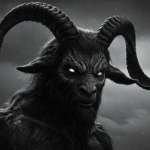
The Bwbach is a Welsh house spirit, a cousin of the Scottish brownie. Small, brown, hairy, and not at all interested in looking pretty. It lived in farmhouse kitchens, did chores at night, and expected to be treated well in return.
Most of what we know comes from one book: British Goblins (1880) by Wirt Sikes, an American who served as US consul in Cardiff. I like picturing that. A man from the other side of the Atlantic, writing down Welsh farm stories before they disappeared, probably over a lot of tea and a lot of polite nodding.
The deal
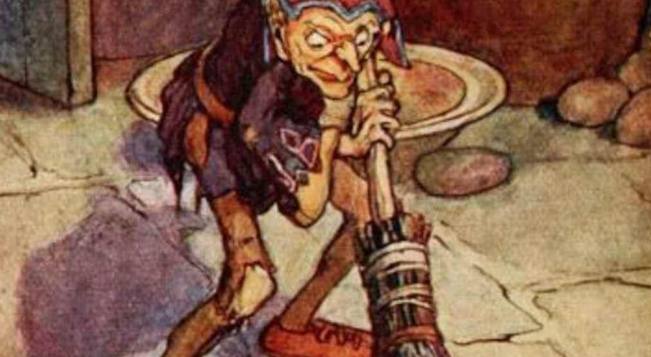
The arrangement went like this. A tidy housemaid swept the kitchen, built up the fire, and set out a churn of cream beside it. Next to the churn she left a separate bowl of cream, and that one was for the Bwbach.
Then she went to bed. In the morning the bowl was empty and the butter was nearly made, so she only had to finish the last few turns.
What gets me about this is the order of operations. The maid had to do her part first. Sweep, fire, cream. The Bwbach wasn’t a free servant. It was a partner in a very specific nightly agreement, and the deal fell apart if either side skipped a step.
Whose house is it, anyway?
Here’s the detail that makes Bwbachod feel different from the cozy “friendly elf” idea. A Bwbach was attached to the house, not the family. Families came and went. The Bwbach stayed.
Imagine buying an old farmhouse and finding out the previous owners left behind a tenant nobody mentioned in the paperwork. And the tenant has opinions about you.
The one thing it couldn’t stand
Sikes says the Bwbach had one outstanding trait: it disliked teetotallers and dissenting ministers. It liked a fireside with ale, pipes and company. Grim piety made it furious.
That is where the Preacher story comes in, and it’s my favorite one in the whole collection.
A Baptist preacher came to stay at a Cardiganshire farmhouse. The Bwbach took one look at him and decided the war was on.
First it yanked the stool out from under him while he was kneeling to pray, and he landed on his face. Then the fire tools started rattling in the middle of his devotions. The dogs began howling every time he opened his mouth to pray. A grinning face showed up at the window and scared the farm boy half to death.
Then it got properly creepy. The preacher was crossing a field, reading his hymn book, when a sudden dread came over him. His legs shook. He saw a shadow behind him and turned around, and there he was, face to face with himself. Same face, same clothes, same hymn book. He fainted on the spot.
They found him in the field. He rode away the next day, and a local boy swore he saw the Bwbach jump up behind him on the horse, grinning, while the animal tore off like lightning.
It’s funny, but only until you imagine being the preacher in that field. The humor and the horror sit very close together here, and I think that’s the whole charm.
Why a goblin would hate a preacher
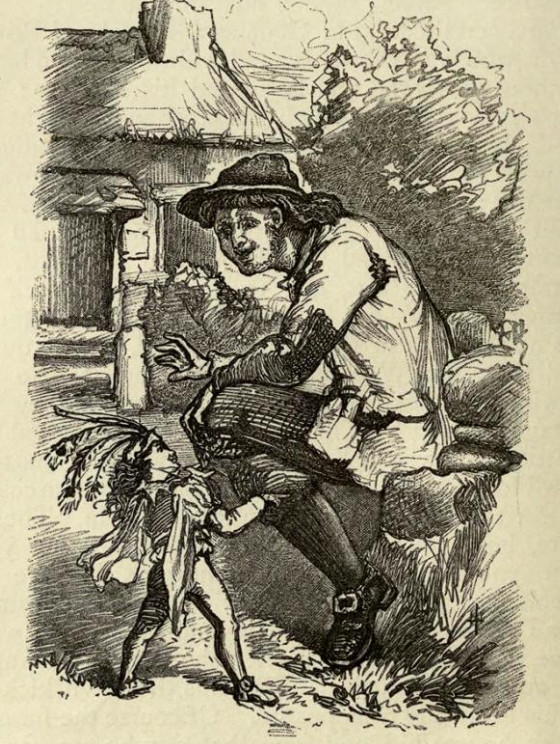
For a long time I read this story as a simple joke: grumpy goblin, stuffy clergyman, slapstick. Then I noticed when these stories were being collected.
Nineteenth-century Wales saw a huge wave of chapel religion, Methodism and other nonconformist movements, along with the temperance campaign that grew next to them. Those movements were, among other things, trying to change what a Welsh home looked like. Less ale by the fire. Less tobacco. Fewer of the loose, noisy evening gatherings that farm households loved.
Now look at what the Bwbach defends. Ale by the fire. Pipes. Company. A house where people sit, drink and talk until late.
So when the goblin torments a preacher, I don’t think it’s only a funny monster story. It looks like a community joking about a real argument it was having with itself. How should we live? Who gets to decide what a good home looks like? The farmhouse crowd couldn’t always say “we like our way of life” out loud to the minister. But they could tell a story where a goblin said it for them, and then physically threw him out.
I should be honest: this is my reading, not something Sikes states, and folklore doesn’t come with a single correct interpretation. But once I saw it, I couldn’t unsee it. The Bwbach is the house’s old habits wearing a hairy little body.
The other work nobody sees
The second thing I kept thinking about is the churn.
Think about what the Bwbach actually does. It finishes the butter overnight. It tidies the kitchen. It does the small, repetitive, necessary jobs that nobody thanks you for and nobody notices until they stop. And look at who is in these stories: the housemaid, the farm boy, the servants. The people who really did that work in real farmhouses.
A household spirit who does the chores at night is, in a way, a story about invisible labor. Somebody has to churn the butter. Somebody has to bank the fire. When the work is done well, nobody sees it happen, and the morning just seems to arrive with everything in place.
And notice what the story demands in return: respect. Don’t treat it like a servant you can order around. Leave the cream, keep the kitchen decent, and don’t push it too far.
I find that oddly modern. Plenty of us know what it’s like to do the work that keeps a household running and to be quietly taken for granted. The Bwbach, grumpy as it is, insists on being acknowledged. It gets cream. It gets rules. And if you ignore it, you find out how much a house actually depends on it.
The darker version
There’s a second side to the Bwbach that I find much stranger.
Sikes also describes it as a frightening phantom connected to restless ghosts and hidden treasure. In these stories, a ghost can’t rest because treasure is buried somewhere on its property. It wants a living person to dig it up, but people don’t tend to cooperate with ghosts.
So the ghost sends the Bwbach. The creature grabs the person and carries them through the air to the place where the treasure lies.
Same name, wildly different job. One minute it’s churning butter for a bowl of cream. The next it’s snatching a stranger into the night sky on a dead man’s behalf.
I can’t tell you for certain how these two versions fit together. They may be separate traditions that ended up sharing a name, which happens all the time with folklore. Or they may be one idea seen from two angles: a being that belongs to the house and its secrets, and that can be kind or terrifying depending on how you treat it. I lean toward the second reading, mostly because it makes the Bwbach more interesting, but that’s a taste, not a fact.
Is it just a Welsh brownie?
Mostly, yes, with the usual caveat that every region puts its own stamp on the type. Scotland has brownies and “broonies.” England has hobs and hobgoblins. Across northern Europe you find helpful night-workers who thresh grain, tend animals and clean rooms in exchange for food and good manners.
What makes the Bwbach feel distinct is its personality. A classic brownie is quiet, hardworking and a bit shy. The Bwbach is loud about its preferences. It wants ale. It wants company. It has a feud with the chapel.
Sikes also sorts the Bwbachod into his larger map of Welsh supernatural beings, alongside creatures like the Coblynau (the mine knockers), the Ellyllon and the Gwragedd Annwn, the lake maidens. Each lives in its own corner of the landscape. Mountains, lakes and mines have their characters. The kitchen has the Bwbach.
What I take from it
If you had told me before I started that a hairy goblin who hates sermons would end up being one of my favorite bits of Welsh folklore, I would have laughed. But there’s a lot packed into this little creature.
It’s a story about hospitality with strings attached. It’s a story about whose house a house really is. It’s a quiet nod to the people who did the night work. And it’s a sly, funny way for a community to push back on being told how to live.
If you ever inherit an old farmhouse, you now know the rules. Keep the kitchen tidy, leave a bowl of cream by the fire, and think hard before you invite a very serious preacher to stay.