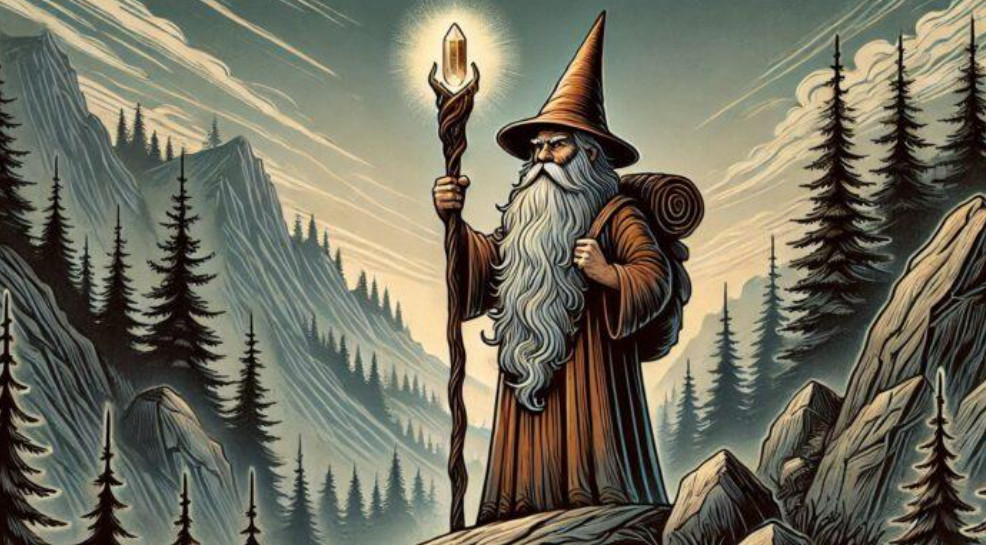
Mountains have always held a special place in Slavic folklore. Their dark forests, hidden caves, and rocky slopes were believed to be home to strange supernatural beings. Some were said to watch over wild animals, others guarded underground treasures, and a few were known to punish anyone who disturbed their homes. One of these mysterious beings was the Gorski Duh, the mountain spirit of Slovenian folklore.
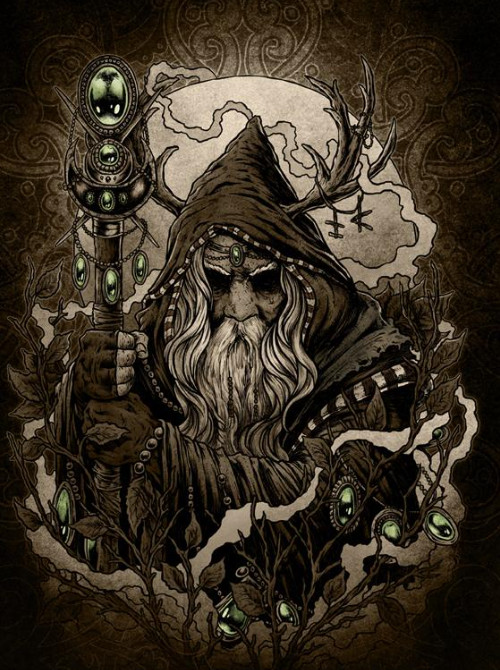
The name Gorski Duh comes from the South Slavic languages, particularly Slovenian, where it means “Mountain Spirit.” The word *gorski* refers to mountains, while *duh* means spirit. It is a simple name, but the stories connected with mountain spirits are anything but simple. They describe strange encounters with supernatural beings, hidden underground worlds, mysterious caves, and creatures that could punish people who disturbed their homes.
Unlike some famous Slavic creatures, Gorski Duh does not have one fixed appearance or a single story shared across every region. Mountain spirits belong to a wider tradition of beliefs about supernatural beings living in remote natural places. Their descriptions could change from one village to another, depending on local traditions and the stories passed down by older generations.
For people who lived near the mountains, these places were often mysterious and dangerous. Thick forests covered the slopes, deep caves disappeared into the ground, and sudden storms could turn a peaceful afternoon into a frightening experience. Travelers sometimes disappeared, shepherds lost their animals, and strange sounds echoed through the valleys. It was easy to imagine that something unseen was watching from the rocks.
In some Slovenian folk traditions, the mountain spirit was imagined as a small supernatural man who lived underground. One traditional tale tells of shepherds watching their sheep near Mount Mrzlica. There was a deep hole in the ground that looked like a well. The shepherds enjoyed throwing stones into it and listening to the sound as they fell into the darkness.
One day, however, something unexpected happened.
A small greenish man suddenly appeared from the hole. He was angry and demanded to know which shepherd had been throwing stones into his home. The stones had fallen on his child below and broken a cup that the little creature was holding.
The shepherds were frightened. None of them wanted to admit what they had done, so they began blaming one another. When the last shepherd was questioned, he quickly thought of a way to escape punishment. He pointed toward a nearby sheep and claimed that the animal had caused the stones to fall into the hole.
The mountain spirit believed him. Still angry, he grabbed the innocent sheep and carried it down into his underground home.
The shepherds were relieved that they had escaped the spirit’s anger, but the poor animal paid the price for their dishonesty.
This strange little story gives us an interesting picture of how mountain spirits were imagined. They were not always enormous giants or terrifying monsters. Sometimes they looked like ordinary little men, had families, owned personal belongings, and lived in underground homes just like humans.
The story also shows that these beings were not necessarily evil. The mountain spirit was angry because someone had disturbed his home and hurt his child. From his point of view, he was simply protecting his family.
Other mountain spirit traditions describe much larger and more powerful creatures. Some were imagined as wild men covered in hair, while others could appear as old travelers, mysterious hunters, or strange figures standing among the rocks. Their appearances were not always clear, and this uncertainty made them even more frightening.
The mountains themselves were often considered the territory of these supernatural beings. Certain caves, mountain springs, cliffs, and hidden valleys were believed to be places where spirits could be found. People who entered these places without respect could supposedly attract unwanted attention.
A traveler might hear footsteps behind him, only to turn around and find nobody there. A shepherd might hear a voice coming from inside a cave. Others spoke of strange figures disappearing behind rocks or moving through the forest much faster than any ordinary person.
Such encounters were often connected with warnings about wandering too far into the wilderness. Mountains could be dangerous even without supernatural creatures, and traditional stories gave people another reason to be careful.
Weather was another important part of mountain spirit legends. Mountain weather could change very quickly. A clear sky could become dark within minutes, strong winds could appear without warning, and thick fog could cover entire valleys.
It is not surprising that people sometimes connected these events with supernatural powers. In some European traditions, mountain spirits were believed to control storms, winds, and other natural forces. They could bring bad weather when they were angry or allow the mountains to remain peaceful when they were satisfied.
A particularly interesting part of these beliefs is the connection between mountain spirits and the underground world. Caves were often treated as entrances to places beyond the human world. People believed that strange beings lived deep beneath the earth, sometimes keeping animals, treasures, and mysterious objects inside their hidden homes.
The green mountain spirit from the Mrzlica story is a good example of this idea. He does not simply appear on the mountain and disappear into the forest. He comes from a hole in the ground and returns to an underground dwelling. His home is hidden from ordinary people, but it is very real within the world of the story.
These underground beings were sometimes compared with dwarfs, gnomes, and other supernatural creatures found in European folklore. However, the traditions were not exactly the same. Every region had its own names, descriptions, and local stories.
Gorski Duh is also connected to the wider Slavic tradition of treating nature as something filled with spiritual life. Forests, rivers, mountains, and other natural places could have their own supernatural inhabitants. People did not always imagine these spirits as distant gods. They could be close to everyday life, living somewhere beyond the village or in a place that people visited regularly.
This made the wilderness feel like a world with its own inhabitants and rules. A mountain was not simply a pile of rocks, and a cave was not necessarily an empty hole. Something might be living inside it, watching anyone who came too close.
It is important to understand that Gorski Duh is not the name of one universally defined creature in all Slavic mythology. The expression is used for a mountain spirit, and different regional traditions have their own mountain beings. Some are friendly, others are dangerous, and some simply want humans to leave them alone.
This is quite different from creatures with a well-established identity and a large collection of widely known legends. There is no single appearance, personality, or complete mythology that belongs to every Gorski Duh story.
Still, the idea of a spirit living inside a mountain is an old and fascinating part of European folklore. It reflects the way people once understood the natural world around them. Mountains were beautiful, but they could also be frightening and unpredictable. A strange sound from a cave or an unexpected storm could easily become part of a supernatural story.
The Gorski Duh remains an interesting figure because he represents something that appears in many old mountain traditions: the belief that the wilderness belongs to more than just humans. Somewhere beneath the rocks, behind the trees, or deep inside a dark cave, another world might exist.
And perhaps the most unsettling part of the old shepherd story is not the appearance of the little green man. It is the idea that he had been living beneath their feet all along, completely undisturbed, until a group of careless shepherds decided to throw stones into his home.